
Skip to content

Robot Signal Transmission Error

Symptoms, Causes & Industrial Signal Cable Diagnostic Guide

Signal transmission errors are among the most overlooked causes of industrial robot instability.

In many cases, the robot controller, servo drive, or encoder is replaced unnecessarily — while the actual failure originates inside the signal cable system.

This guide explains:

  • Common symptoms of robot signal transmission failure
  • Why signal cables fail under robotic motion stress
  • How to diagnose intermittent communication problems correctly
  • When signal cable replacement is the most effective repair strategy

Why Signal Transmission Errors Rarely Start as Clear Alarms

In industrial robots, signal transmission problems usually begin subtly.

Instead of showing an obvious “signal cable failure” alarm, the robot may exhibit:

  • Intermittent operational faults
  • Random encoder alarms
  • Axis stopping unexpectedly
  • Servo communication instability
  • Teach pendant lag or freezing
  • Temporary recovery after restart

Because the symptoms appear inconsistent, these issues are frequently misdiagnosed as:

  • Servo amplifier failure
  • Encoder malfunction
  • Controller instability
  • Software or network problems

However, in real-world maintenance environments, the root cause is often degraded signal integrity inside high-flex robot cables.

Signal Cable vs Power Cable — A Critical Distinction

One of the biggest diagnostic mistakes is treating signal cables like power cables.

Power Cables

Power cables transfer electrical energy to motors and devices.Even with moderate wear, the system may still operate normally as long as voltage delivery remains stable.

Signal Cables

Signal cables carry high-frequency communication data between:

  • Encoders
  • Servo drives
  • Controllers
  • Teach pendants
  • Fieldbus modules

Unlike power transmission, signal communication is extremely sensitive to:

  • Shielding quality
  • Impedance stability
  • EMI interference
  • Internal conductor integrity

A cable may still provide normal voltage while simultaneously corrupting communication data.

Even minor defects such as:

  • Shield cracking
  • Partial conductor fracture
  • Connector oxidation
  • EMI leakage

can destabilize signal transmission.

The result may include:

  • Ghost alarms
  • Position errors
  • Random communication faults
  • Unexpected robot stops

Common Symptoms of Robot Signal Transmission Errors

Intermittent Robot Faults

Typical behavior:

  • Faults appear randomly during operation
  • Restart temporarily clears alarms
  • Problems worsen over time

Most likely cause:

  • Internal conductor fatigue inside high-flex cable sections

Encoder & Feedback Errors

Common symptoms:

  • Position loss alarms
  • Encoder communication instability
  • Feedback synchronization errors

Most likely causes:

  • Shield degradation
  • EMI interference
  • Signal attenuation inside encoder cables

Robot Axis Not Moving or Sudden Stops

Typical behavior:

  • Servo appears ready but axis will not move
  • Robot freezes mid-cycle
  • Motion stops without clear mechanical cause

Most likely cause:

  • Signal interruption between controller and drive

Teach Pendant Lag or No Response

Common symptoms:

  • Delayed input response
  • Intermittent screen freezing
  • Random disconnect behavior

Most likely cause:

  • Unstable communication through pendant signal cables

Random Communication Alarms

Typical symptoms:

  • Fieldbus disconnection warnings
  • Drive communication loss
  • Intermittent network alarms

Most likely cause:

  • Motion-induced micro-breaks inside signal wiring

The Hidden Failure Mechanism Inside Robot Signal Cables

Most signal cable failures are invisible from the outside.

The cable jacket may appear completely normal while internal communication integrity is already degraded.

Common Internal Failure Mechanisms

Internal Conductor Micro-Fractures

Repeated flexing gradually damages copper strands inside the cable.

Shielding Breakdown

Damaged shielding allows EMI interference to corrupt communication signals.

Connector Fatigue & Oxidation

Small resistance changes inside connectors can destabilize high-frequency data transmission.

Repeated Wrist-Axis Torsion

Axis 5 and Axis 6 areas experience the highest cable stress in most industrial robots.

Why Standard Continuity Tests Often Fail

One of the most misunderstood realities in robotic diagnostics:

A cable can pass continuity testing and still fail during operation.

Why?

Because signal integrity depends on far more than simple electrical continuity.

Reliable communication requires:

  • Stable impedance
  • Effective EMI shielding
  • Clean high-frequency signal transmission
  • Consistent conductor contact during motion

A standard multimeter only measures low-voltage static continuity.

It cannot detect:

  • Motion-dependent micro-breaks
  • Shield leakage
  • High-frequency signal distortion
  • Dynamic impedance instability

Step-by-Step Diagnostic Logic

Step 1 — Determine Whether the Fault Is Motion-Dependent

Ask:

Does the problem occur mainly while the robot is moving?

If yes, cable-related failure becomes highly probable.

Step 2 — Perform a Cable Swing Test

Carefully move or flex the cable harness while monitoring system behavior.

If faults trigger during cable movement:

  • Internal conductor damage is strongly suspected
  • Micro-breaks are likely present

Step 3 — Inspect High-Stress Areas

Focus on:

  • Axis 5 and Axis 6 cable routing
  • Teach pendant cable entry points
  • Connector locking stability
  • Areas exposed to repeated torsion

Check for:

  • Loose pins
  • Oxidation
  • Shield damage
  • Tight bend radius stress

Step 4 — Use a Known-Good Cable

Replacing the suspected signal cable with a verified working cable is often the fastest and most reliable diagnostic method.

This eliminates uncertainty quickly and reduces unnecessary component replacement.

Root Cause Mapping

Symptom Common Misdiagnos is Actual Root Cause
Encoder error Encoder failure Signal cable shielding degradation
Axis not moving Servo motor failure Communication signal interruption
Random alarms Controller instability Internal conductor fracture
Communication drop Network issue High-flex cable fatigue
Pendant freezing HMI software issue Pendant signal cable instability

In many industrial repair cases, signal cable replacement restores system stability without requiring expensive servo or controller replacement.

When Should You Replace the Signal Cable?

Signal cable replacement becomes strongly recommended when:

  • Faults are motion-dependent
  • Alarms become more frequent over time
  • Multiple unrelated communication alarms appear
  • Restart temporarily restores operation
  • Robot operates in high-flex applications
  • Cable has long-term repetitive motion exposure

Recommended Solution Path

Signal cable compatibility varies significantly between robot platforms.

Always match the replacement solution to the robot’s communication architecture.

Or explore the full range of industrial solutions:
Browse All Industrial Signal Cable Categories

FAQ

What causes signal transmission errors in industrial robots?

Most signal transmission failures are caused by:

  • Internal cable fatigue
  • Shield degradation
  • Connector instability
  • Motion-induced conductor damage

rather than controller or motor failure.

Why do faults appear only during robot movement?

Because damaged conductors may disconnect only when the cable bends or twists under motion stress.

When stationary, electrical continuity may appear normal.

My multimeter shows 0 ohms. Is the cable still bad?

Possibly, yes.

A multimeter cannot detect:

  • EMI leakage
  • Dynamic signal instability
  • High-frequency communication degradation
  • Motion-dependent micro-interruptions

These problems often appear only during real robot operation.

Should I replace the encoder or the signal cable first?

In most cases, start with the signal cable.

Signal cables:

  • Fail more frequently
  • Cost less to replace
  • Are exposed to constant motion stress

This makes cable replacement the lower-risk diagnostic step.

What is the typical lifespan of a robot signal cable?

Most industrial robot signal cables last approximately:

  • 2–5 years in high-motion environments
  • Longer in low-flex applications

Lifespan depends on:

  • Motion intensity
  • Bend radius
  • Routing quality
  • Environmental exposure
  • EMI conditions

Explore the Full Guide: Industrial Robot Knowledge Hub  →  Repair & Troubleshooting Cluster

Explore the complete guide for troubleshooting, repair strategies, and component replacement across industrial robot systems.

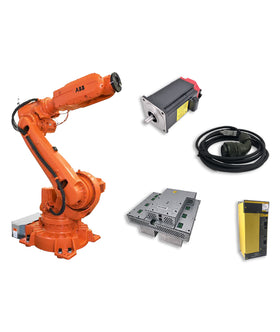
🔧 Recommended Parts for signal transmission error

Key components commonly involved in signal transmission error issues and replacements.

Previous article UR Joint Overload Error – Symptoms & Diagnostic Guide

Leave a comment on this topic

* Required fields

Blog posts

Compare products

{"one"=>"Select 2 or 3 items to compare", "other"=>"{{ count }} of 3 items selected"}

Select first item to compare

Select second item to compare

Select third item to compare

Compare