



FANUC SRVO-068 Alarm (Pulse Coder Alarm) is a common FANUC robot fault that appears when the controller loses stable position feedback from the servo motor encoder system.
Typical symptoms include sudden robot stops, axis movement failure, intermittent alarms during motion, or alarms that disappear after restart and return later.
Because SRVO-068 directly affects robot positioning and motion control, identifying the root cause quickly is important for reducing production downtime.
SRVO-068 occurs when the controller cannot properly read the signal from the pulse coder (encoder). Since the robot relies on encoder feedback for precise positioning, any signal interruption will trigger this alarm.
Robot motion depends on continuous feedback from the pulse coder (encoder). During operation:
If signal transmission becomes unstable or interrupted, the controller detects inconsistent feedback and generates SRVO-068.
If the issue is intermittent, it is often a strong indication of cable-related problems rather than a complete hardware failure.
| Observed Symptom | Possible Cause |
|---|---|
| Alarm appears only during robot movement | Internal encoder cable fatigue or conductor breakage |
| Alarm appears immediately after startup | Loose connector or unstable feedback hardware |
| Only one robot axis is affected | Axis-specific encoder or cable issue |
| Alarm disappears after restart and returns later | Intermittent cable connection problem |
| Alarm remains after cable replacement | Servo amplifier or control hardware issue |
Observed behavior often provides useful diagnostic clues before replacing components. In many maintenance situations, the alarm pattern itself helps narrow down the probable source of the problem.
In field maintenance environments, encoder cable fatigue is frequently observed because robot movement repeatedly bends and stresses the cable assembly.
Connector issues can interrupt signal transmission between the encoder and controller, triggering unstable feedback signals.
If the encoder itself fails, the controller cannot receive accurate position data.
Although less common, internal faults in the servo amplifier or control board can also cause feedback errors.
The alarm pattern often narrows down the source before hardware replacement begins.
Check the encoder cable for visible wear, bending damage, or loose connections. Pay close attention to areas near joints where movement is frequent.
Disconnect and reconnect all encoder-related connectors. Ensure there is no corrosion or contamination.
Move the robot slowly while monitoring the alarm. If the alarm appears only during movement, the cable is very likely damaged internally.
If possible, replace the encoder cable with a known working one. If the alarm disappears, the cable is confirmed faulty.
If the problem persists after cable replacement, inspect the servo amplifier and related hardware.
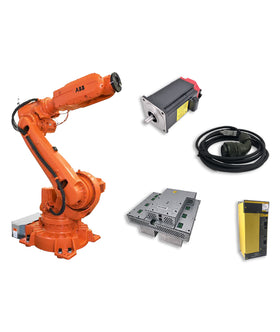
The following components are frequently inspected during SRVO-068 diagnosis because they directly affect feedback signal transmission and position verification.
Check Compatible Encoder Cables →
While temporary fixes such as reconnecting cables may work, they are usually not reliable for long-term operation.
In industrial environments, replacing faulty components is typically more cost-effective than repeated troubleshooting downtime.
In many maintenance cases, SRVO-068 is not caused by complete cable breakage, but by internal conductor fatigue.
This behavior often occurs because conductor strands inside the cable temporarily reconnect and disconnect as the robot changes position.
As a result, the robot may operate normally at one position but trigger SRVO-068 when the cable bends during movement.
This is why cable replacement is often recommended even if no external damage is visible.
Yes. Internal conductor fatigue may temporarily reconnect and disconnect as the robot moves.
Continued operation is generally not recommended because unstable feedback can affect positioning accuracy.
No. Cable degradation and connector problems are frequently encountered in field service situations.
The alarm details page on the controller usually indicates the affected axis. Repeated alarms on the same axis often suggest a localized cable or encoder issue.
Explore the Full Guide: Industrial Robot Fault Codes Library → Fanuc Alarm Codes
Explore the complete guide for troubleshooting, repair strategies, and component replacement across industrial robot systems.
Key components commonly involved in fanuc alarm troubleshooting issues and replacements.


{"one"=>"Select 2 or 3 items to compare", "other"=>"{{ count }} of 3 items selected"}
Leave a comment on this topic