If SRVO-133 (Encoder Data Error) appears, try these immediate actions:
- Power cycle the robot controller
- Check encoder cable connections for proper seating
- Inspect connectors between servo motor and amplifier
- Reset the alarm and test motion at low speed
- Avoid running the robot at full speed until the issue is resolved
These steps can resolve temporary encoder data inconsistencies.
What is FANUC SRVO-133 Encoder Data Error?
FANUC Alarm SRVO-133 (Encoder Data Error) occurs when the controller detects invalid or corrupted position feedback from the servo motor encoder.
The encoder provides critical data for:
- Real-time axis positioning
- Accurate motion control
- Synchronization between axes
When the data is corrupted or missing, the robot stops to prevent positioning errors.
What Does SRVO-133 Mean?
SRVO-133 indicates that the controller is receiving incorrect or inconsistent signals from the encoder.
This can include:
- Missing or corrupted pulses
- Abnormal or out-of-range encoder counts
- Communication failure between motor and amplifier
Common Causes of FANUC SRVO-133
Encoder Cable or Connection Failure
Faulty cables are a primary cause.
Common issues include:
- Broken or worn wires
- Loose connectors
- Shielding damage causing signal corruption
Inspecting and securing cables restores stable encoder communication.
Faulty Connectors
Connector problems can interrupt data flow.
Common issues include:
- Bent or oxidized pins
- Poorly seated connectors
- Contaminated contacts
Proper cleaning and reseating can often resolve these issues.
Servo Motor Encoder Fault
The encoder inside the motor may fail.
Common issues include:
- Internal circuit malfunction
- Signal instability due to heat or wear
- Mechanical damage to encoder
Replacing the faulty encoder ensures reliable data transmission.
Servo Amplifier Processing Error
The amplifier handles encoder feedback before sending it to the controller.
Common issues include:
- Feedback processing faults
- Hardware degradation
- Software or parameter misconfiguration
Electrical Noise or Interference
External interference can corrupt encoder data.
- High-power equipment near encoder cables
- Poor grounding
- Incorrect cable routing
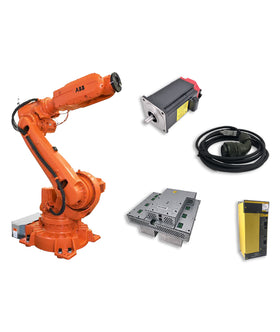
Recommended Parts for SRVO-133 Repair
The following components are commonly required when resolving SRVO-133 alarms:
-
FANUC Encoder Cables
→ Replace if communication signals are unstable or intermittent
-
FANUC Servo Motors (with Encoder)
→ Replace if the encoder hardware is defective
-
FANUC Servo Amplifiers (Alpha i / Beta i Series)
→ Replace if feedback signal processing is unreliable
Browse available FANUC spare parts at inrobots.shop for fast replacement and global shipping.
How to Troubleshoot FANUC SRVO-133
Step 1: Power Cycle the Controller
- Turn off the system completely
- Restart and verify if the alarm persists
Step 2: Inspect Encoder Cables
- Check for physical damage
- Ensure secure and correct connections
Step 3: Reseat Connectors
- Disconnect and reconnect encoder connectors
- Ensure proper alignment and contact
Step 4: Identify Affected Axis
- Determine which axis triggers the alarm
- Focus troubleshooting on that specific axis
Step 5: Check Servo Amplifier
- Inspect amplifier LEDs and alarm indicators
- Confirm stable signal processing
Step 6: Evaluate Servo Motor Encoder
- Test encoder feedback using diagnostic tools
- Replace motor or encoder if data corruption persists
Step 7: Check Electrical Environment
- Ensure proper grounding
- Reduce electromagnetic interference near cables
Pro Diagnostic Tip
A practical method used by FANUC service engineers to quickly pinpoint SRVO-133 causes:
Swap Encoder Cables Between Axes
- Disconnect the encoder cable from the affected axis.
- Connect it to another axis and monitor alarms.
Interpret Results:
-
If the alarm follows the cable: The problem is likely the encoder/signal cable (signal corruption, shielding degradation, or connector wear).
-
If the alarm remains on the same axis: The issue is likely within the servo motor encoder or servo amplifier.
Why It Works:
SRVO-133 is often caused by intermittent or corrupted encoder signals rather than complete hardware failure.
Encoder cables endure continuous bending, vibration, and exposure to nearby high-power devices, which can degrade signal integrity over time.
By isolating the cable from the axis, engineers can quickly confirm whether the issue is cable-related or component-related, avoiding unnecessary replacement of expensive motors or amplifiers.
Next Step:
If the swap test indicates a cable fault, replace it with high-flex FANUC encoder cables designed to maintain precise pulse communication under industrial motion stress.
This ensures stable feedback, minimizes intermittent SRVO-133 alarms, and supports long-term robot reliability
How to Fix FANUC SRVO-133
Proven Fix Methods
- Replace damaged or faulty encoder cables
- Repair or replace defective servo motor encoders
- Replace defective servo amplifiers
- Clean and secure connectors
- Improve grounding and shielding to prevent interference
Important Note
SRVO-133 indicates encoder data inconsistency:
Ignoring this alarm can lead to position errors, motion faults, or system shutdowns.
Preventing Encoder Data Errors
- Regularly inspect encoder cables and connectors
- Maintain proper grounding and shielding
- Avoid routing encoder cables near high-power devices
- Perform scheduled maintenance checks
- Monitor early warning signs of encoder instability
Related FANUC Alarm Codes
These alarms are closely related to encoder and feedback system issues.
Conclusion
- FANUC Alarm SRVO-133 – Encoder Data Error indicates corrupted or invalid feedback from the encoder.
- By inspecting cables, connectors, servo motors, and amplifiers, engineers can restore stable and accurate robot operation.
FAQ
What causes SRVO-133?
Common causes include encoder cable faults, connector issues, servo motor encoder failure, or amplifier processing errors.
Can I reset SRVO-133 and continue running?
Only if the issue is temporary. Persistent alarms require immediate troubleshooting.
Is SRVO-133 critical?
Yes, because encoder data errors affect positioning accuracy and robot safety.
How do I fix encoder data errors?
Inspect cables, reseat connectors, and replace faulty components as needed.
Leave a comment on this topic