



In Universal Robots systems, a Protective Stop is a safety-state response triggered when the controller detects abnormal behavior in motion control or safety communication.
In many production environments, the robot stops even though no actual collision occurs.
A large percentage of intermittent Protective Stops are linked to unstable safety communication rather than mechanical impact.
Common causes include:
The teach pendant is not only an operator interface.
Inside the UR safety architecture, it also participates in:
Even very small communication interruptions can trigger a Protective Stop.
Typical field behavior:
In many cases, operators initially suspect collision detection even though no physical contact occurred.
One of the most common early warning signs.
Typical symptoms include:
In real production cells, pendant instability often appears seconds before the Protective Stop occurs.
Common characteristics:
Many intermittent cases become worse when:
A critical diagnostic clue.
The robot may stop during:
At the same time:
If moving the cable changes the symptom, safety communication instability becomes highly likely.
Possible indicators include:
These faults are usually intermittent and difficult to reproduce consistently.
One of the highest-frequency causes of random Protective Stops is internal cable deterioration.
Common failure modes include:
A cable may still pass a basic continuity test while failing under motion or vibration.
This is extremely common in high-cycle production environments.
Typical field pattern:
Common field behavior:
This aging pattern is very common on older production robots.
Teach pendant and controller exchange continuous safety heartbeat signals in real time.
Controller validates heartbeat timing inside a narrow control window:
8 ms ~ 16 ms
Very small interruption is enough to trigger safety logic.
Operator usually sees nothing physically.
Typical failure chain in field conditions:
shield degradation
→ signal attenuation
→ missed heartbeat packet
→ watchdog timeout
→ controller assumes unsafe state
→ Protective Stop
Very common near:
A large number of “random Protective Stops” are actually heartbeat timing instability problems.
UR safety architecture uses redundant channel validation.
When cable degradation affects synchronization:
Channel A ≠ Channel B
The controller immediately interprets this as unsafe.
Result:
Typical log behavior:
In many cases:
robot mechanics remain completely normal.
Highest-risk locations:
Frequently seen on:
Intermittent cable faults often change with temperature.
Typical behavior includes:
This pattern is easy to misdiagnose as random controller instability.
Electrical noise is another major source of intermittent Protective Stops.
Common contributors include:
Symptoms often become worse:
Weak grounding can easily imitate communication failure behavior.

Check whether the stop occurs:
If cable movement changes behavior, inspect the teach pendant cable first before replacing mechanical components.
Inspect carefully:
Cable hardening near the strain relief is extremely common on aging robots.
Check:
Even small oxidation can destabilize safety communication intermittently.
Very common in:
Perform testing only in:
Unexpected interruption may trigger immediate brake engagement.
Avoid aggressive bending during testing.
If faults appear at specific cable positions:
If no reaction occurs, continue investigating:
Verify:
Many “motion faults” are actually safety timing problems.
Seen constantly in integrated production lines.
If available:
Very effective for intermittent cases.
Fast way to separate:
| Observation | Mechanical Collision Likely | Cable / Communication Issue Likely |
| Stop sound | Physical impact sound | Only relay/brake click |
| Repeatability | Same position every cycle | Random or inconsistent |
| Trigger condition | Trajectory dependent | Cable movement related |
| Restart state | Possible position deviation | Position unchanged |
| Teach pendant behavior | UI stable | Flicker / lag / blackout |
Collision sound present?
→ likely mechanical collision or overload
No collision sound?
→ continue
Cable movement changes behavior?
→ teach pendant cable failure highly probable
“Safety System Discrepancy” appears in logs?
→ inspect:
No clear trigger?
→ continue deeper communication diagnostics
In real-world UR service work, Protective Stops without visible mechanical deviation are frequently linked to:
A common diagnostic mistake is focusing only on robot mechanics.
In many intermittent cases, the real failure exists inside the safety communication layer.
Usually because safety communication became unstable.
Common causes:
Physical collision is not required.
Yes.Cable does not need complete breakage.Small conductor cracks or shield damage are enough to destabilize safety communication.
Collision faults are usually repeatable at the same position. Cable-related faults are often random and sensitive to cable movement or vibration.
Perform controlled wiggle test in:
If fault appears during cable movement:
teach pendant cable failure becomes highly probable.
A UR Protective Stop is fundamentally a safety integrity reaction.
Not just a motion interruption.
From teach pendant cable perspective, diagnos is should prioritize:
Before assuming:
Always verify signal integrity first.
A large percentage of “random Protective Stops” start there.
Explore the Full Guide: Industrial Robot Teach Pendant Center → Teach Pendant Cable Failure
Explore the complete guide for troubleshooting, repair strategies, and component replacement across industrial robot systems.
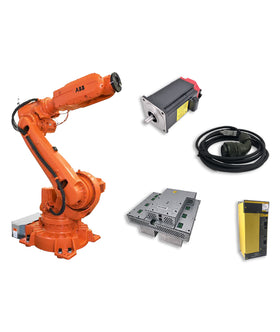
Key components commonly involved in teach pendant cable failure issues and replacements.


{"one"=>"Select 2 or 3 items to compare", "other"=>"{{ count }} of 3 items selected"}
Leave a comment on this topic