



Encoder Error / Feedback Lost is one of the most critical fault categories in industrial robotics because it directly affects:
When encoder feedback becomes unstable or disappears completely, the robot controller may immediately disable servo power to prevent:
Typical results include:
Although many technicians initially suspect the motor or servo drive, real-world field failures are much more commonly caused by instability somewhere in the encoder feedback chain, especially:
This guide provides a structured troubleshooting path from:
Symptom → Root Cause → Diagnostic Workflow → Correct Repair Strategy
Industrial robot feedback systems rely on continuous communication between multiple components.
A typical encoder feedback chain includes:
Encoder → Encoder Cable → Servo Amplifier → Controller
Any instability along this path can interrupt position feedback and trigger alarms.
When encoder communication becomes unstable, the robot may experience:
Even a short signal interruption can stop an entire robotic production cell.
If your robot shows any of the following symptoms, encoder feedback problems are highly likely:
Motion-related alarms are especially important because they often indicate internal cable fatigue.
Different robot brands use different alarm structures, but the underlying failure pattern is often similar.
Typical failure points include:
Related troubleshooting topics naturally include:
Frequent weak points include:
Related troubleshooting resources include:
In industrial robots, encoder cables operate in extremely demanding environments.
Typical stress factors include:
Over time, these conditions cause:
These problems usually affect the encoder cable long before the encoder or motor itself fails.
Field maintenance experience consistently shows:
Most recurring encoder alarms are caused by signal integrity problems rather than encoder hardware failure.
This is especially true in:
In these environments, continuous motion accelerates cable fatigue dramatically.
If alarms occur only while the robot is moving, the most likely causes include:
This happens because cable movement changes signal continuity dynamically.
Motion-dependent faults are one of the strongest indicators of feedback cable degradation.
Before replacing expensive servo hardware, it is important to evaluate both cost and downtime impact.
| Factor | Encoder / Motor Replacement | Encoder Cable Replacement |
| Cost | High | Low |
| Downtime | 4–8 hours or more | Often under 1 hour |
| Complexity | High (re-mastering required) | Lower |
| Calibration Risk | Significant | Minimal |
| Success Rate | Uncertain if misdiagnosed | High in common field cases |
In many FANUC SRVO and ABB encoder alarm cases, replacing the encoder cable resolves the problem without replacing the motor or encoder.
Before replacing major components, verify the following:
If the answer is yes to multiple questions above, cable-related signal instability is highly likely.
Common examples include:
Determine whether the issue is:
Operate the robot at reduced speed and monitor whether the alarm appears during motion.
If faults appear at specific positions, internal cable damage becomes highly likely.
Check for:
Even minor connector instability can interrupt encoder communication.
Gently flex the cable while monitoring the alarm.
If the alarm changes during movement, internal conductor fatigue is likely present.
Focus especially on:
Temporary replacement with a known-good cable is often the fastest confirmation method.
If the fault disappears after replacement, the feedback signal chain is confirmed as the root cause.
Recommended when:
Recommended when:
When encoder or feedback alarms occur repeatedly:
In many real-world applications, restoring stable signal transmission resolves the issue without replacing expensive servo systems.
Industrial robot encoder cables should include:
Standard commercial cables are not designed for continuous robotic motion environments.
Encoder cable quality directly affects:
To reduce unexpected encoder failures:
Preventive maintenance is especially important in robots operating continuously at high speed.
No. Most encoder-related alarms are caused by signal transmission problems such as cable degradation or connector instability.
Robot motion changes cable stress conditions. Internal conductor fatigue and shielding failure often create intermittent signal interruption during movement.
Yes, but the fault usually returns if the underlying signal problem remains unresolved.
Yes. Although the architectures differ, both systems rely heavily on stable encoder signal transmission and are sensitive to cable degradation.
Very urgent. Feedback instability can lead to:
Additional topics that naturally support encoder diagnostics include:
Encoder Error / Feedback Lost faults are rarely caused by the controller itself.
In most industrial robot systems, the true failure source is signal instability somewhere inside the feedback chain.
When diagnosing encoder alarms, prioritize troubleshooting in this order:
Encoder Cable → Connector → Shielding & Signal Integrity → Servo System → Encoder Hardware
This approach reduces downtime, avoids unnecessary component replacement, and resolves the majority of recurring field failures more efficiently.
Explore the Full Guide: Industrial Robot Knowledge Hub → Repair & Troubleshooting Cluster
Explore the complete guide for troubleshooting, repair strategies, and component replacement across industrial robot systems.
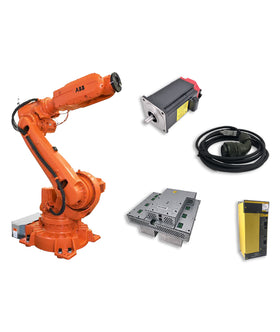
Key components commonly involved in encoder error feedback lost issues and replacements.


{"one"=>"Select 2 or 3 items to compare", "other"=>"{{ count }} of 3 items selected"}
Leave a comment on this topic