

Introduction
In the global robotics landscape, one type stands above the rest: articulated robots. These multi-jointed, human-arm-like machines have become the standard across sectors like automotive, electronics, healthcare, and logistics. Unlike fixed-function robots, articulated arms are known for their flexibility, range of motion, and precision. This article explores what sets them apart, why industries rely on them, and how they’re shaping the future of automation.
Part 01: What Makes Articulated Robots Unique?
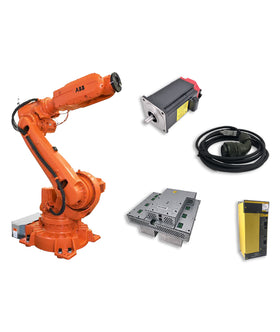
Articulated robots mimic the human arm using 4 to 6 rotational joints (axes), giving them a high degree of freedom (DOF). This allows them to move fluidly in 3D space—bending, twisting, and reaching where other robots can’t. Their versatility surpasses that of:
-
Cartesian robots (limited to linear X-Y-Z movements)
-
SCARA robots (constrained to horizontal motions)
-
Delta robots (excellent for speed, but not flexibility)
Because of this, articulated arms can handle intricate tasks—like welding curved surfaces, assembling small electronics, or polishing complex components—with unmatched precision.

Part 02: Why Do Industries Prefer Articulated Robots?
Several key benefits make articulated robots the go-to solution across industries:
-
Exceptional Flexibility
They can be reprogrammed for different tasks—material handling, painting, welding, etc.—reducing the need for multiple machines. -
Cost Efficiency at Scale
In high-volume manufacturing, their speed and accuracy significantly boost productivity while lowering error rates and operational costs. -
Human-Robot Collaboration (Cobots)
Modern articulated cobots, equipped with AI and force sensors, can work safely beside humans, enabling automation in smaller, more agile production setups.
📊 According to the International Federation of Robotics (IFR), articulated robots account for over 62% of global industrial robot sales.
Part 03: Real-World Applications of Articulated Robots
Articulated robots are transforming entire industries:
-
Automotive: A 6-axis arm can perform precision spot welding with ±0.1mm accuracy. For instance, Tesla uses articulated robots to assemble battery packs, reducing human error and increasing throughput by 30%.
-
Healthcare: Systems like the da Vinci Surgical Robot (7-DOF) assist surgeons in minimally invasive operations, improving accuracy and reducing recovery time.
-
Logistics: At Amazon, articulated robots work with AMRs to pick and sort items of varying shapes, improving fulfillment speed by 40% while reducing physical strain on workers.

Part 04: What Challenges Limit Wider Adoption?
Despite their strengths, articulated robots aren’t perfect:
-
Programming Complexity: Skilled technicians are often needed to set up motion paths, increasing deployment time and labor costs.
-
Maintenance Requirements: Their intricate joint and sensor systems need regular servicing to avoid costly downtime.
-
Safety in Shared Spaces: Although cobots have improved safety, traditional articulated robots still require robust collision avoidance systems.
-
Cost vs. Task Simplicity: For simpler, high-speed tasks, SCARA or Delta robots may offer better ROI due to their lower cost and faster cycle times.
Part 05: How Are Articulated Robots Evolving?
As technology advances, articulated robots are becoming smarter, safer, and more sustainable:
-
AI Integration: Robots are learning to detect obstacles, adapt to real-time changes, and optimize paths without human intervention.
-
Modular Design: Interchangeable end-effectors allow for faster task reconfiguration, reducing setup time across different applications.
-
Lightweight Materials: Carbon fiber and composite components are cutting energy use by up to 20%, supporting eco-friendly automation.
🤖 While Boston Dynamics' Atlas showcases dynamic agility, industrial articulated robots prioritize stability and task precision over movement freedom.

Part 06: What Are the Ethical Concerns Around Articulated Robots?
As articulated robots expand across industries, several ethical issues emerge:
-
Job Displacement: Automation may replace low-skill jobs, highlighting the need for retraining programs and policies that support workforce transition.
-
Liability in High-Stakes Tasks: Who is at fault if a surgical robot fails? Determining responsibility among manufacturers, operators, or AI developers is legally and ethically complex.
-
Cybersecurity: Networked robots can be vulnerable to cyberattacks, risking downtime and data breaches.
To ensure responsible growth, industries must embrace transparent AI, safety protocols, and workforce reskilling initiatives.
Conclusion
Articulated robots have proven to be the backbone of industrial automation, offering unmatched versatility, accuracy, and long-term value. With continuous improvements in AI, modularity, and human-robot collaboration, their role will only grow stronger. But to fully realize their potential, we must also address the social and ethical challenges they bring.
The future of work won’t be about robots replacing humans—it will be about robots enhancing human capability. The industries that succeed will be the ones that get this balance right.
------
FAQs
Q1: Can articulated robots replace human workers entirely?
Not entirely. They handle repetitive and precise tasks well, but humans remain essential for creativity, decision-making, and supervision.
Q2: How much does an industrial articulated robot cost?
Typically between $20,000 (basic models) and $200,000+ (high-payload or AI-integrated systems). Leasing and government incentives can offset initial costs.
Q3: Which industries are likely to adopt articulated robots fastest in the next 5 years?
Healthcare, aerospace, and agriculture are key growth sectors, driven by labor shortages, need for precision, and automation-friendly conditions.


Leave a comment on this topic