

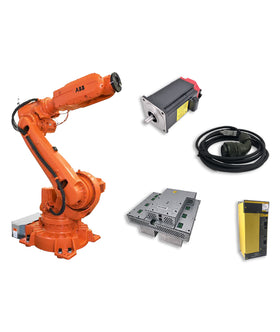


Since their emergence in the 1980s, mechanical arms have become pivotal in automating complex, high-precision tasks across industries. As the backbone of industrial robotics, these articulated devices enable enhanced productivity, quality, and safety. Beyond traditional manufacturing, their footprint now extends to sectors including medical robotics, aerospace, agriculture, and defense.
This article offers an in-depth exploration of mechanical arms’ architecture, kinematic principles, broad industrial applications, and cutting-edge innovations, providing engineers, technical buyers, and robotics enthusiasts with a thorough understanding of this transformative technology.
A mechanical arm is a sophisticated automated device designed to replicate the degrees of freedom and functionality of the human arm. It consists of a series of rigid links connected by joints, actuated by electrical, hydraulic, or pneumatic systems, and controlled through embedded controllers with feedback from a network of sensors.
The system’s main challenge lies in accurately solving the inverse kinematics problem, enabling the arm’s end effector to reach a desired position and orientation within a three-dimensional workspace. Advanced control algorithms and real-time sensor feedback allow the arm to execute complex, repetitive, and high-precision tasks with consistency and speed.
The base provides mechanical support and stability, often integrating a rotary joint for horizontal arm rotation. Its design uses high-strength alloys or composite materials balancing stiffness, durability, and weight to maintain positional accuracy during dynamic operations.
Joints serve as the arm’s axes of rotation or translation, typically of revolute or prismatic types. Each joint’s encoder or resolver delivers precise position feedback, critical for closed-loop control. Most industrial arms possess six to seven DOF, enabling full spatial positioning and orientation of the end effector, mirroring human arm dexterity.
The terminal tool interfaces directly with the environment and is task-specific. Examples include mechanical grippers, welding torches, spray nozzles, and force/torque sensors. Interchangeable end effectors extend the arm’s versatility across varied applications.
Actuators convert energy into motion, ranging from high-precision electric servo motors to hydraulic systems that provide substantial force and pneumatic actuators favored for rapid cycling. Selection depends on payload, speed, precision, and operational environment.
An integrated sensor suite ensures the arm’s accurate and safe operation. Position sensors monitor joint angles and link positions; force/torque sensors enable compliant interaction with objects; vision systems support object recognition and path planning; environmental sensors detect temperature, vibration, and obstacles.
The controller executes complex motion planning, sensor fusion, and feedback regulation. Modern controllers incorporate embedded AI, enabling adaptive control, fault detection, and real-time trajectory optimization, essential for autonomous and collaborative robotic systems.
Mechanical arms are typically classified by their joint structures and coordinate system frameworks:
Cartesian Robots: Move along orthogonal X, Y, and Z axes with linear actuators, ideal for simple pick-and-place and CNC machining tasks.
Cylindrical Robots: Combine rotational base movement with linear and vertical slides, forming a cylindrical work envelope suitable for loading/unloading and assembly.
Polar Robots: Utilize two rotational joints and a linear actuator to cover a spherical or polar workspace, offering wide area reach.
Articulated Robots: Feature multiple rotary joints arranged serially, delivering high degrees of freedom and dexterity for complex 3D tasks such as welding and painting.
Mechanical arms automate high-volume, high-precision tasks such as welding, material handling, and packaging. They reduce labor costs and errors while increasing production throughput and safety.
Surgical robotic systems leverage mechanical arms for minimally invasive procedures, providing surgeons with enhanced precision, dexterity, and tremor filtering, improving patient outcomes.
Robotic arms execute assembly, inspection, and maintenance in hazardous or inaccessible environments, including space stations and unmanned aerial vehicles, pushing the frontier of autonomous operations.
Integrated with machine vision and AI, mechanical arms perform crop harvesting, planting, and sorting with unprecedented efficiency and selectivity, advancing sustainable farming.
Universities and laboratories use robotic arms to study human-robot interaction, machine learning in robotics, and advanced control strategies, fueling innovation and workforce development.
Artificial Muscles and Soft Robotics: Electroactive polymers and shape memory alloys mimic biological muscle properties, enabling compliant, lightweight, and strong actuators for enhanced flexibility.
Multi-modal Sensor Fusion: Combining tactile, force, and visual sensing provides rich environmental awareness and precise manipulation in unstructured settings.
Intelligent Control Systems: Incorporating deep reinforcement learning and AI algorithms allows mechanical arms to autonomously adapt to new tasks and environments.
Human-Robot Collaboration (Cobots): Safe, sensor-rich mechanical arms designed for direct interaction with humans, enhancing productivity without physical barriers.
Realistic Prosthetics: Advanced sensors linked to neural interfaces enable prosthetic arms to provide tactile feedback and intuitive control, narrowing the gap between biological and artificial limbs.
At inrobots.shop, you will find a comprehensive selection of mechanical arms and accessories from industry-leading brands including ABB, KUKA, FANUC, and Yaskawa Motoman. The platform offers models spanning various payloads and reach capabilities to fit diverse industrial and research applications, with global shipping and professional support.
Mechanical arms represent the epitome of modern mechatronics and automation technology, enabling unprecedented levels of precision, flexibility, and productivity across industries. As AI, materials science, and sensor technologies evolve, mechanical arms will become increasingly intelligent, adaptive, and collaborative, driving the next wave of industrial transformation and human augmentation.
Higher DOF offers greater flexibility but increases complexity and cost. Payload capacity must match operational requirements. A careful trade-off ensures optimal performance.
Standard algorithms include PID, model predictive control (MPC), robust control, and emerging deep reinforcement learning techniques for autonomous adaptation.
Implement preventative maintenance, sensor calibration, real-time diagnostics, and periodic professional servicing to ensure consistent, high-quality operation.
Explore the Full Guide: Industrial Robot Knowledge Hub → Industrial Robot Types & Applications Cluster
Explore the full guide to discover related topics and gain deeper insights into industrial automation.
Key components commonly involved in robot applications issues and replacements.


{"one"=>"Selecione 2 ou 3 itens para comparar", "other"=>"{{ count }} de 3 itens selecionados"}
Selecione o primeiro item para comparar
Selecione o segundo item para comparar
Selecione o terceiro item para comparar
Deixe um comentário