

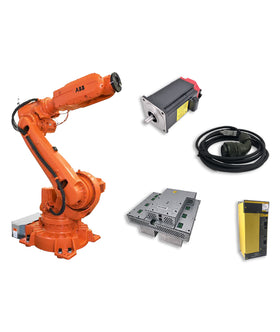
From smart homes to automated factories, robotic systems are becoming an essential part of our everyday lives. But what exactly is a robotic system?
At its core, a robotic system is an intelligent, interconnected setup of hardware and software components that work together to perform tasks—either autonomously or with minimal human input.
In this guide, we’ll walk you through the fundamentals of robotic systems, their major types, core components, real-world applications, and the challenges of implementation.

Part1: Understanding the Basics of Robotic Systems
A robotic system isn’t just a single robot—it’s a combination of integrated parts working in harmony to perceive, process, and act. Think of it as a highly capable machine that pairs mechanical strength with artificial intelligence.
These systems are designed to:
-
Perform repetitive or complex tasks
-
Operate with precision and speed
-
Learn and adapt through AI and machine learning
Unlike traditional machinery, robotic systems can analyze their environments, make real-time decisions, and continuously improve their performance.
Part2: Types of Robotic Systems
Robotic systems come in various forms, each designed for specific tasks or working environments. The three most common types are:
1. Autonomous Robots
These robots operate independently without real-time human control. They rely on sensors, AI algorithms, and pre-programmed instructions to make decisions and complete tasks.
Examples: Self-driving cars, robotic vacuum cleaners, warehouse delivery bots.
2. Remotely Operated Robots
Controlled by humans from a distance, these robots are ideal for hazardous or inaccessible environments.
Examples: Bomb disposal robots, remote surgical robots, underwater exploration systems.
3. Augmenting Robots
Rather than replacing humans, these robots work alongside us to enhance our abilities.
Examples: Robotic exoskeletons for physical support, collaborative robotic arms in factories, robotic surgical assistants.
Part3: Core Components of a Robotic System
A well-functioning robotic system relies on the seamless coordination of several key components:
1. Central Processing Unit (CPU)
The “brain” of the robot. It processes sensor inputs, runs control algorithms, and manages movement coordination.
2. Sensors
These act as the robot's “eyes,” “ears,” and “skin,” allowing it to collect data from the environment—like proximity, light, temperature, or force.
3. Actuators
Actuators turn processed data into motion, enabling robots to move, grip, rotate, or lift. These may include electric motors, pneumatic systems, or hydraulic pistons.
Each component must work in sync to ensure accurate and safe task execution.

Part4: Real-World Applications of Robotic Systems in Manufacturing
Robotic systems are revolutionizing modern manufacturing. Here’s how they’re being used:
1. Assembly Lines
Robots handle repetitive assembly tasks with high precision, such as welding automotive parts or assembling electronics—boosting efficiency and reducing human error.
2. Packaging
They can swiftly seal, label, and box products of varying sizes and shapes. Robots ensure speed and consistency, even during high-volume operations.
3. Material Handling
From stacking pallets to moving heavy engine blocks, robotic arms make material handling safer and more efficient, minimizing injuries and manual labor.
With machine learning and AI, these systems are becoming smarter and more adaptive—making on-the-fly decisions and optimizing production processes in real time.

Part5: Challenges in Implementing Robotic Systems
While the benefits are clear, integrating robotic systems into existing workflows isn't without its challenges:
1. High Initial Costs
Robots, especially advanced ones, require significant upfront investment—including hardware, software, and integration.
2. Maintenance and Upgrades
Ongoing maintenance, part replacements, and system upgrades can be costly and time-consuming.
3. Workforce Training
Employees must learn new skills to operate, program, and maintain robotic systems. Upskilling is essential to ensure smooth collaboration between humans and robots.
4. Workflow Redesign
You may need to reconfigure factory layouts, retrain staff, or adjust your processes to accommodate robotic systems effectively.
Proper planning and employee involvement are key to successful adoption and long-term ROI.

Conclusion
A robotic system is an interconnected network of components designed to perform tasks either independently or with minimal human intervention. These systems are often used to automate manufacturing applications, reducing labor costs and production time. Robotics combines various fields, including engineering, computer science, and artificial intelligence, to design, build, and operate robots that can replicate or substitute human actions.
Inrobot.shop is a robotic system integrator that provides solutions for robot companies such as Motoman , Fanuc, Universal Robots, ABB, and KUKA. We specialize in robot control systems. Feel free to reach out to us for more information about robotic systems.
Overall, robotic systems enhance efficiency and accuracy in various industries, making them essential in modern technology.
FAQs
Q: What role do sensors play in a robotic system?
A: Sensors allow robots to perceive their environment—helping them detect obstacles, measure distances, or adjust to environmental changes in real time.
Q: What are actuators in robotics?
A: Actuators convert electrical or hydraulic energy into physical movement, enabling robots to carry out actions like lifting, rotating, or gripping.
Q: Are robotic systems used outside of manufacturing?
A: Absolutely. Robotic systems are also used in surgery, agriculture, logistics, and even space exploration.


Deixe um comentário