

Part 1: What Is Manual Pulse Generation?
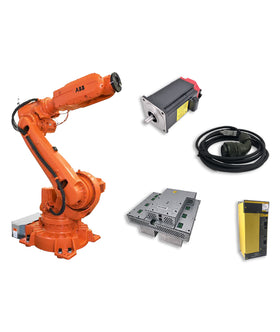
Manual Pulse Generation (MPG) is a crucial feature in CNC machines, servo systems, and robotic equipment. It allows operators to make precise, incremental movements of machine axes using a physical handwheel or electronic interface. By generating manual pulses, users can fine-tune alignment, positioning, and calibration without relying on automated sequences.
This method is widely used in machine setup, tool alignment, and real-time adjustments, especially in environments requiring operator judgment and precision.

Part 2: Two Main Types of MPG
1. Hardware-Based MPG (Physical Handwheel or Encoder)
-
Uses a dedicated rotary encoder connected to the control system
-
Generates electrical pulses through mechanical rotation
-
Common in CNC machines, servo drives, and industrial robots
Advantages:
-
High reliability without software interference
-
Immediate, low-latency feedback
-
Adjustable resolution (e.g., ×1, ×10, ×100 per pulse)
2. Software-Based MPG (Virtual Jogging)
-
Uses a touchscreen, keyboard, or HMI to simulate pulse generation
-
Integrated into modern CNC software or PLC control systems
Advantages:
-
No additional hardware needed
-
Easily configurable for different step sizes and speeds
-
Seamless integration with digital control interfaces
Part 3: Manual vs. Automatic Generators – A Quick Comparison
While unrelated to MPG, understanding manual and automatic generators helps clarify their roles in industrial settings:
| Feature | Manual Generator | Automatic Generator |
|---|---|---|
| Operation | Requires manual start/stop | Starts/stops automatically via ATS |
| Use Cases | Portable use, small-scale power backup | Hospitals, data centers, continuous operation |
| Advantages | Low cost, simple design, durable | Uninterrupted power, remote monitoring |
| Drawbacks | Needs human intervention | Higher cost, complex maintenance |
Part 4: How Manual Pulse Generation Works
MPG systems translate rotary motion into electrical pulses. These pulses are then interpreted by the control system to move motors or axes in small steps.
Common Methods of Pulse Generation:
-
Mechanical encoders – Found in MPG handwheels; use rotary motion to produce precise pulses. INRobots.shop’s MPG encoders offer gold-plated contacts and rugged design for durability.
-
Electronic pulse generators – Based on ICs like the 555 timer, these circuits can produce stable pulse trains with configurable frequency and duty cycles.
-
Oscillator-based systems – Provide high-accuracy pulses using crystals for frequency stability, suitable for sophisticated control circuits.
Part 5: When to Use Manual Pulse Generation
Manual pulse generation is ideal when:
-
Setting up CNC tools or robotic systems – MPG allows accurate micro-adjustments during tool calibration or robot teaching.
-
Working in hazardous or delicate environments – Operators can ensure safe movement that automated systems may not achieve reliably.
-
Operating in remote areas – MPG provides manual control when complex automation isn’t available.
Use Cases:
-
CNC machine setup and jogging
-
Robotic arm teaching mode
-
Servo motor positioning
-
Emergency manual control
MPG continues to play a critical role in precision applications where human input and tactile feedback are irreplaceable.
FAQs
1. What is Manual Pulse Generation (MPG)?
MPG is a manual control feature that uses pulse signals—generated via a handwheel or digital interface—to precisely move machine components in CNC, servo, and robotic systems.
2. How does an MPG handwheel function?
An encoder inside the handwheel produces pulses as it turns. The control system reads these signals to move machine axes in precise steps.
3. Is MPG used during automatic operations?
Usually not. MPG is intended for manual control modes. However, some systems permit limited MPG input during specific semi-automatic operations.
4. Are MPG devices built for harsh environments?
Yes. Models like those available at inRobots.shop are designed with protective coatings to resist dust, oil, and mechanical wear.


Deixe um comentário