
コンテンツにスキップ

Yaskawa Robot Loses Position? Absolute Encoder, Servo Pack & Encoder Cable Diagnostic Guide

When a Yaskawa robot loses position (DX200 / YRC1000 systems), the first assumption in the field is usually calibration or mastering related.

But in actual maintenance work, that’s rarely the real cause.

Most cases end up being feedback instability in the servo loop — not controller failure, not program drift, and not mechanical wear.

Yaskawa positioning depends on a closed loop like this:

Absolute Encoder → Encoder Cable → Servo Pack → Controller

If anything in this chain becomes unstable, the robot starts to show drift, offset, or mastering inconsistency during production.

Sometimes it looks random. Sometimes it only happens under motion.

1. What “Robot Loses Position” Means in Yaskawa Systems

Position in Yaskawa robots is not a fixed stored value.

It is rebuilt continuously from encoder feedback + servo correction inside the servo pack.

When that feedback becomes unstable, you start seeing:

  • Robot slightly off from taught points
  • Offset after restart or power cycle
  • Drift increasing during repeated cycles
  • Position shift only under load
  • TCP slowly becoming inaccurate in production

In most real cases, this is not mechanical movement. It’s feedback not staying consistent.

2. Yaskawa Feedback Architecture (What Actually Matters)

Signal path is simple on paper:

Absolute Encoder → Encoder Cable → Servo Pack → Controller

Servo pack is doing real-time interpretation of encoder data.

So even small issues matter:

  • EMI noise
  • Shield damage
  • Connector resistance
  • Micro signal drop

At this level, the robot doesn’t “break” suddenly — it just becomes slightly wrong over time.

3. Core Reality: Encoder Cable Is Usually the Starting Point

In Yaskawa systems, encoder cable is not just wiring.

It is the actual data path for absolute position.

When it starts degrading, you usually see:

  • Small noise in feedback loop
  • Intermittent encoder loss
  • Wrong sampling during motion
  • Drift after long cycle runs
  • Unstable correction during acceleration

Why motor replacement often doesn’t help

Because the motor is not the failing part most of the time.

Typical pattern in the field:

  • Robot runs fine at startup
  • Drift shows up only in production
  • Reset or reboot temporarily “fixes” it
  • Problem comes back later

That cycle usually points back to cable or connector, not motor.

4. Yaskawa-Specific Root Causes

4.1 Encoder Cable Fatigue (Most Common)

Seen mostly on wrist / high-movement axes.

  • Internal wire fatigue
  • Shield layer breakdown
  • Intermittent contact under motion
  • EMI sensitivity increases over time

Result is not instant failure — it’s slow drift.

4.2 Servo Pack Feedback Instability

Servo pack misreads encoder signals when noise increases.

Typical behavior:

  • Slight correction delay
  • Axis not settling correctly
  • Multi-axis small mismatch
  • Drift under continuous motion

Often mistaken as tuning problem.

4.3 Alarm-Driven Position Issues

Common signals include encoder / feedback related alarms.

Important point:

Alarm is not the root cause
It is the result of unstable loop feedback.

4.4 Motor Encoder Degradation (Less Frequent)

  • Thermal drift over long operation
  • Resolution inconsistency
  • High-load signal jitter

Still less common than cable issues.

5. What Usually Gets Misdiagnosed

In real factories, people often jump to:

  • Mechanical backlash
  • Servo tuning adjustment
  • Controller calibration reset
  • Software mastering reset
  • Gear wear

But in field data, most cases come back to:

Encoder cable or feedback instability

That’s why symptoms often look “weird”:

  • Pass static test
  • Fail only during production
  • Come back after reboot
  • No clear mechanical fault found

6. Diagnostic Workflow (Field Style)

Step 1 — Static vs Motion Check

  • Idle position OK?
  • Drift appears only during cycle?

If yes → feedback issue likely

Step 2 — Cable Movement Test

During jogging:

  • Slightly move encoder cable
  • Watch axis reaction

If position changes → internal fatigue likely

Step 3 — Alarm Pattern Check

Look for:

  • Motion-triggered alarms
  • Acceleration-related deviation
  • Random production faults

Step 4 — Servo Pack Stability

Check:

  • Axis correction consistency
  • Feedback fluctuation under load
  • Sync issues between movements

Step 5 — Replacement Order (Important)

  1. Encoder cable
  2. Connectors / shielding
  3. Motor encoder system
  4. Servo motor last

Most cases stop at step 1 or 2.

7. Simple System View

Absolute Encoder

Encoder Cable

Servo Pack

Controller

Motion Output

Any weak point here = drift, alarm, or offset.

8. Field Pattern That Matters Most

If you see this pattern:

  • OK after startup
  • Drift increases during production
  • Worse with motion cycles
  • Temporary fix after restart

This is almost always encoder cable degradation.

9. Preventive Maintenance

  • Use high-flex cables on moving axes
  • Avoid tight bending near wrist joints
  • Check shielding condition during service
  • Replace aging cables before failure
  • Watch alarm frequency trends
  • Confirm encoder stability during diagnostics

FAQ

Why does Yaskawa robot lose position during operation?

Most cases come from feedback instability, usually encoder cable or signal degradation inside servo loop.

Motion drift vs origin data loss?

  • Origin loss → usually battery / absolute reference issue
  • Motion drift → encoder cable / signal instability

Can encoder cable really cause drift?

Yes. Even small shielding or internal damage affects feedback accuracy over time.

Should cable or motor be replaced first?

Always cable first. Motor failure is far less common in these cases.

Explore the Full Guide: Repair & Troubleshooting Cluster  →  Yaskawa Robot Loses Position

Explore the complete guide for troubleshooting, repair strategies, and component replacement across industrial robot systems.

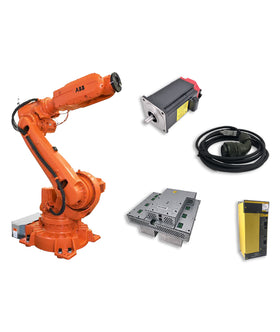
🔧 Recommended Parts for Yaskawa Robot Loses Position

Key components commonly involved in yaskawa robot loses position issues and replacements.

📘 Related Resources for Yaskawa Robot Loses Position
  • No related articles found in this topic.
前の記事 UR Joint Overload Error – Symptoms & Diagnostic Guide

コメントを残す

*必須フィールド

Blog posts

製品の比較

{"one"=>"比較する2つまたは3つのアイテムを選択します", "other"=>"選択された3つのアイテムの{{ count }}"}

比較する最初のアイテムを選択します

比較する2番目の項目を選択します

比較する3番目の項目を選択

比較