



Field Insight
In real-world applications, the Yaskawa A.850 position error is usually caused by a mismatch between commanded position and actual movement.
Th is commonly occurs when the servo system cannot achieve the required positioning accuracy due to mechanical resistance, poor tuning, unstable feedback, or insufficient torque.
The Yaskawa A.850 alarm occurs when the actual axis position deviates beyond the allowable tolerance range.
In simple terms:
The motor cannot accurately reach the commanded position, so the system stops to prevent motion instability or accuracy loss.
This is what differentiates A.850 from other motion-related alarms:
Before deep troubleshooting, try th is:
If the alarm disappears at lower speed, the issue is typically related to tuning, load, or dynamic response.
These conditions prevent the motor from reaching the commanded position accurately.
In some cases, continuous tracking instability may also trigger motion-related faults.
If the robot shows lag during movement rather than only at the final position, reviewing Yaskawa A.860 following error troubleshooting may help identify the difference.
Unlike current or temperature alarms, A.850 troubleshooting focuseson positioning accuracy and motion response.
If the alarm disappears after reducing resistance, overload or friction is the likely root cause.
If excessive load is suspected, reviewing Yaskawa A.720 overload alarm troubleshooting can help confirm whether torque limitations are involved.
Mechanical wear is one of the most common long-term causes of positioning errors.
Proper tuning is critical for maintaining positioning accuracy.
In many industrial environments, intermittent feedback problems are caused by worn wiring.
Inspect Yaskawa motor cables and encoder cables if unstable position signals are suspected.
If the motor cannot maintain required positioning accuracy under load, torque capacity may be insufficient.
In these situations, evaluating compatible Yaskawa servo motors can help restore stable positioning performance.
|
Symptom |
Likely Cause |
|
Cannot reach position |
Load or motor issue |
|
Accuracy loss |
Tuning problem |
|
Lagging motion |
Gain too low |
|
Random position error |
Encoder issue |
Once the root cause is confirmed, the issue is usually related to one of the following components:
Servo Motors
If torque output is insufficient or response is too slow, selecting a suitable model from your Yaskawa servo motors range helps restore position accuracy.
Motor Cables
Stable encoder feedback is critical. Inspect or replace worn Yaskawa motor cables if signal instability is suspected.
Mechanical Components
Gearboxes, couplings, and transmission parts must operate smoothly to maintain positioning accuracy.
In production environments, repeated A.850 alarms often indicate gradual performance degradation rather than temporary tuning issues.
Understanding Yaskawa Alarm Codes helps isolate root causes more efficiently:
These alarms are frequently interconnected in high-speed robotic systems.
Mechanical resistance, excessive load, or improper servo tuning are the most common causes.
Yes. If the issue is parameter-related and no major mechanical wear exists, proper tuning can often resolve the problem.
Yes. Unstable encoder feedback or signal loss can cause inaccurate position tracking.
Only if the motor cannot provide sufficient torque or maintain positioning accuracy under load.
A.850 focuseson final positioning accuracy, while A.860 relates to continuous motion tracking during movement.
Explore the Full Guide: Industrial Robot Fault Codes Library → Yaskawa Alarm Codes
Explore the complete guide for troubleshooting, repair strategies, and component replacement across industrial robot systems.
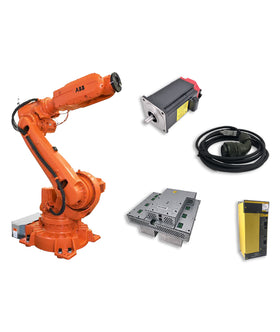
Key components commonly involved in yaskawa alarm troubleshooting issues and replacements.


{"one"=>"比較する2つまたは3つのアイテムを選択します", "other"=>"選択された3つのアイテムの{{ count }}"}
コメントを残す