

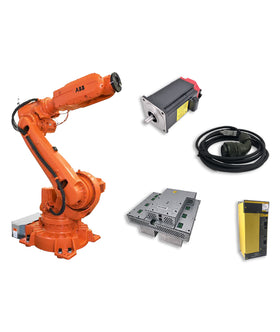


If your teach pendant screen appears black but the device still powers on, the problem may not be a complete display failure. In many industrial robots, the issue is simply a failed backlight system.
Typical symptoms include:
In most cases, this is a visibility problem rather than a controller or communication failure.
A teach pendant no backlight issue happens when the LCD panel is still generating an image, but the illumination behind the screen stops working.
This differs from:
Because the LCD is still functioning, the robot system itself is often unaffected — operators simply cannot see the interface clearly.
The fastest way to identify a backlight failure is the flashlight test.
This is one of the most reliable field diagnostic methods for industrial robot pendants.
Backlight systems gradually wear out in industrial environments due to:
This is the most common cause of no-backlight issues.
The backlight circuit requires stable voltage to operate correctly.
Possible causes include:
In some cases, the LCD still works normally but receives insufficient power for illumination.
Teach pendant cables experience constant movement and bending.
Common cable-related causes:
Cable issues often create intermittent brightness loss before complete failure.
Less common but still possible:
These faults usually require component-level repair or board replacement.
Confirm whether the LCD is still generating an image.
If interface graphics are faintly visible, the issue is almost certainly backlight-related.
Verify the teach pendant power supply:
Unstable voltage can disable the backlight while leaving the LCD active.
Check for:
Gently move the cable while observing the display for intermittent changes.
Pay attention during power-on:
These clues help distinguish power-related issues from hardware failure.
If available:
This is often the fastest way to isolate the faulty component.
Backlight-related repairs are often significantly cheaper thanfullfull pendant replacement.
In industrial robotics maintenance, many reported “black screen” problems are actually backlight failures rather than total display failures.
As a result:
Proper identification of backlight failure can reduce repair costs and downtime significantly.
Teach pendant no-backlight issues are especially common in:
To isolate the exact failure, compare these related symptoms:
These diagnostic paths help determine whether the problem involves the backlight, LCD, touchscreen, or controller communication.
Use the flashlight test.
Yes. In many cases, the controller and touchscreen still function normally even though the display cannot be seen clearly.
Often yes — especially when the LCD panel itself remains functional.
Yes. Low or unstable voltage can disable the backlight circuit while the LCD continues operating.
Not necessarily. Many no-backlight problems can be repaired at a much lower cost thanfullfull replacement.
Explore the Full Guide: Industrial Robot Teach Pendant Center → Teach Pendant no backlight
Explore the complete guide for troubleshooting, repair strategies, and component replacement across industrial robot systems.
Key components commonly involved in teach pendant no backlight issues and replacements.


{"one"=>"比較する2つまたは3つのアイテムを選択します", "other"=>"選択された3つのアイテムの{{ count }}"}
コメントを残す