


Few robot faults are more frustrating than a communication problem that appears and disappears without warning.
A robot may run normally for hours, then suddenly generate a network alarm, lose communication with a servo drive, report an encoder fault, or stop unexpectedly. After a reset, the system returns to normal operation and may continue running for another shift before the problem reappears.
Because the fault is intermittent, maintenance teams often suspect software instability, controller problems, or network glitches. In reality, most communication dropouts originate much deeper within the signal transmission system.
Cable fatigue, connector degradation, electromagnetic interference (EMI), shielding failures, grounding issues, and feedback communication instability can all create temporary signal interruptions that eventually trigger network alarms.
Understanding how these failures develop is essential for reducing downtime and improving robot reliability.
A communication dropout occurs when information exchanged between controllers, servo drives, encoders, safety systems, or industrial networks is interrupted long enough to violate communication requirements.
Unlike permanent communication failures, intermittent dropouts recover automatically or disappear after a restart.
Typical symptoms include:
The key characteristic is inconsistency.
The system functions normally most of the time, making the underlying problem difficult to reproduce.
Many communication faults seem unpredictable because the actual failure exists for only a fraction of a second.
The controller records the resulting alarm, but not necessarily the physical event that caused it.
For example:
Although the disturbance is brief, the controller reacts immediately by generating a communication fault or stopping motion.
By the time troubleshooting begins, the original signal disruption has already disappeared.
Communication failures rarely originate from a single source.
Most result from gradual degradation somewhere within the signal transmission path.
Robot cables operate under continuous bending, twisting, and vibration.
Over millions of motion cycles, conductors may begin developing internal fatigue damage.
Typical progression includes:
One of the most difficult aspects of cable failure is that the cable often appears visually normal while internal conductors are already damaged.
Connectors are among the most common causes of intermittent communication faults.
Over time, connectors experience:
Initially these defects create only minor resistance changes.
As degradation progresses, communication quality becomes increasingly unstable.
High-speed communication systems depend heavily on proper shielding and grounding.
When shielding integrity deteriorates:
Grounding problems can produce similar symptoms and are frequently overlooked during troubleshooting.
Electromagnetic interference is a major contributor to communication instability in industrial robots.
Common EMI sources include:
These devices generate electrical noise that can interfere with communication signals.
When communication cables have damaged shielding or poor grounding, noise can enter the signal path and corrupt transmitted data.
The result may include:
In many cases, EMI does not directly cause the failure. Instead, it exposes weaknesses that already exist within the communication infrastructure.
Some communication problems occur only when the robot moves.
This is one of the strongest indicators of a physical-layer issue.
Typical patterns include:
These symptoms often point toward:
Because the fault depends on cable geometry, the robot may run normally when stationary.
Feedback communication is particularly sensitive to signal quality degradation.
Modern robots rely on continuous data exchange between:
Even brief communication interruptions can trigger:
In many situations, the reported alarm is only the final symptom of a deeper communication problem.
A common question from maintenance teams is:
"Why does the fault disappear after a restart?"
The answer is simple.
Restarting resets:
However, the physical cause remains unchanged.
If the underlying problem is a damaged cable, worn connector, shielding defect, or grounding issue, the communication fault will eventually return.
Temporary recovery after restart is often a strong indicator of an intermittent physical-layer failure.
The robot DressPack system plays a major role in long-term signal integrity.
Throughout its service life, the DressPack experiences:
Over time, these stresses can damage:
The highest-risk locations are typically near Axis 4–6 where motion and torsional stress are greatest.
Many random communication dropouts ultimately trace back to cable degradation within the DressPack system.
Related resources:
Communication systems are heavily influenced by operating conditions.
Vibration can cause:
Temperature changes may alter:
This explains why some communication faults only appear after warm-up.
Poor EMI control can significantly reduce communication reliability, especially when shielding systems are already degraded.
Successful diagnos is requires identifying patterns rather than isolated alarms.
Look for recurring issues such as:
Repeated alarms often reveal the affected communication path.
Determine whether failures occur during:
Motion-dependent behavior often indicates cable or connector issues.
Focus on:
These areas frequently contain hidden mechanical damage.
Check for:
Connector-related failures are among the most common causes of intermittent communication loss.
Useful technologies include:
These methods can expose failures that static continuity testing often misses.
Long-term reliability depends on maintaining healthy signal transmission systems.
Best practices include:
Preventive maintenance should include:
Reliable communication requires:
Monitor:
These indicators often reveal degradation long before communication failures become severe.
Communication reliability frequently depends on:
Together, these components form the communication infrastructure that determines overall robot reliability.
Random communication dropouts are rarely random.
Most originate from gradual degradation within cables, connectors, shielding systems, feedback networks, or grounding architectures.
Although the resulting alarms may appear unpredictable, the underlying causes usually follow identifiable patterns related to motion, vibration, temperature, or signal integrity.
By focusing on physical-layer reliability rather than simply clearing alarms, maintenance teams can identify root causes earlier, reduce unnecessary component replacement, and prevent recurring production interruptions.
The most common causes include cable fatigue, connector degradation, EMI exposure, shielding failures, grounding problems, and feedback communication instability.
Restarting resets communication states and alarm conditions, but does not eliminate the physical cause of the problem.
Yes. Internal conductor fatigue and shielding degradation frequently create temporary communication interruptions.
Motion changes cable stress and connector loading, exposing hidden defects that may not be visible during static inspection.
Yes. Electrical noise can corrupt communication signals, especially when shielding or grounding systems have deteriorated.
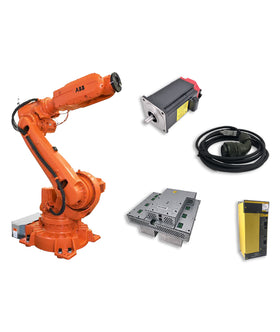
Key components commonly involved in issues and replacements.
No related parts found. Please check available components in our catalog.


{"one"=>"比較する2つまたは3つのアイテムを選択します", "other"=>"選択された3つのアイテムの{{ count }}"}
コメントを残す