



Random disconnection in ABB robots is one of the most misleading and costly field issues because it appears unstable, non-reproducible, and controller-independent.
In most cases, the root cause is not a controller failure, but a communication instability in FlexPendant wiring, fieldbus signal integrity, or robot data cables.
Field service data shows that a large proportion of ABB intermittent disconnect faults are directly linked to degraded communication cables or shield integrity loss, especially in high-motion or high-vibration applications.
This guide helps engineers quickly identify whether the issue comes from:
Typical ABB intermittent communication failure symptoms include:
When diagnosing random disconnect issues, the following ABB system messages are frequently observed:
⚠️ Key diagnostic insight:
These errors often appear randomly and intermittently, which is a strong indicator of physical layer instability rather than software or controller failure.
In ABB systems, the FlexPendant is not just a user interface — it is part of the safety and communication loop.
If the spiral cable develops:
The system may trigger:
In most field cases, this is the first component that should be physically inspected before controller-level diagnostics.
ABB controllers rely on high-speed and noise-sensitive communication lines.
Common failure modes include:
Resulting symptoms:
Recommended solution path: ABB Robot Communication Cable
In systems using DSQC modules or Ethernet-based communication:
⚠️ Important:
Fieldbus errors often mimic cable failure, making physical inspection essential before replacing control hardware.
Less frequent but still critical in industrial environments:
These conditions amplify existing cable weaknesses and trigger random disconnect behavior.
A widely used ABB field diagnostic method:
A multimeter continuity test may still show a “healthy” cable, but ABB communication systems operate under high-speed digital signal transmission, not simple continuity logic.
At this level:
can cause 10–50ms packet loss.
The controller interprets this as:
→ communication instability → protective disconnect behavior
This is why random disconnect issues often appear “invisible” during basic testing.
Cable replacement should be prioritized when:
At this stage, repair is not stable — replacement is the only reliable long-term fix.
Recommended category: Robot Communication Cable
ABB robots (especially IRC5 / S4C+ architectures) rely on:
This means:
Even minor degradation in communication cables can triggerfullfull system-level disconnect behavior.
If ABB robots experience intermittent disconnection symptoms combined with any of the following conditions:
Then the issue is highly likely related to physical-layer communication instability rather than controller failure.
In most field cases, the root cause is traced back to:
degraded communication cables, shield fatigue, or connector-level micro-failure.
Unlike mechanical faults, communication instability in ABB systems:
This is why diagnostic focus must prioritize cable integrity first before controller replacement.
This is usually caused by intermittent communication cable failure or signal instability, not controller damage.
Yes. It is one of the most common root causes of intermittent disconnect issues, especially in high-motion environments.
Because the fault is temporary signal loss, not permanent hardware failure.
Perform a movement-based stress test. If disconnect correlates with motion or bending → cable is confirmed.
Explore the Full Guide: Repair & Troubleshooting Cluster → Robot Disconnects Randomly
Explore the complete guide for troubleshooting, repair strategies, and component replacement across industrial robot systems.
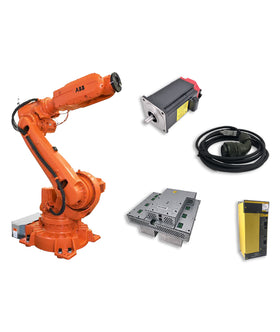
Key components commonly involved in abb robot disconnects randomly issues and replacements.


{"one"=>"比較する2つまたは3つのアイテムを選択します", "other"=>"選択された3つのアイテムの{{ count }}"}
コメントを残す