

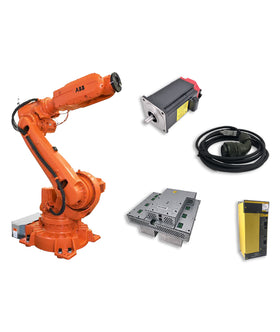

Imagine having a reliable assistant in industrial automation that tirelessly controls and coordinates complex tasks. In the realm of robotics, Programmable Logic Controllers (PLCs) deliver exactly that kind of capability.
Often considered the unsung heroes of automation, PLCs simplify the management of complex robotic systems with incredible precision and reliability. In this article, we’ll explore how PLCs have revolutionized robotic automation—from the fundamentals to practical applications, advantages, and challenges.
What Is a PLC in Robotics?
A Programmable Logic Controller (PLC) is a specialized industrial computer used to automate electromechanical processes. In robotics, PLCs monitor inputs from sensors and devices, execute pre-programmed logic, and control outputs—ultimately dictating how robots move and respond to their environment.
PLCs are trusted for their:
-
Reliability under harsh conditions
-
Scalability for complex systems
-
Speed for real-time control
-
Flexibility for reprogramming and system updates
Whether it’s guiding a robotic arm on an assembly line or synchronizing an entire fleet of machines, PLCs are at the core of modern factory automation.
What makes PLCs so valuable in robotic applications? Here are the standout features:
1. Built for Harsh Environments
PLCs are engineered to operate in tough conditions—heat, dust, vibration, moisture, and electromagnetic interference. This makes them well-suited for factory floors, outdoor operations, and mobile robotic systems.
2. High-Speed Processing
Modern PLCs can handle thousands of instructions per second with minimal latency. This rapid response ensures coordinated, real-time control of robotic actuators, motors, vision systems, and sensors.
3. Visual Programming with IEC Languages
Instead of traditional coding languages, PLCs often use intuitive visual languages like Ladder Logic, Function Block Diagrams (FBD), or Structured Text (ST). These standards (IEC 61131-3) make it easier for engineers to design, debug, and adjust control sequences.
4. Robust I/O Capabilities
PLCs offer extensive digital and analog I/O points to interface with robotic devices—motor drives, proximity sensors, HMIs, and more—enabling comprehensive, centralized system control.
Benefits of implementing a PLC robot

PLC-based robots deliver more than just automation—they bring reliability, precision, and efficiency to the forefront.
1. Precision and Accuracy
PLCs provide real-time control over robotic motion. Whether it’s placing micro-components on a circuit board or performing high-speed laser cutting, PLCs ensure consistently accurate results.
2. Reduced Human Error
By programming complex sequences into a PLC, manufacturers reduce manual intervention and the variability that comes with it. Tasks are executed exactly as designed—every time.
3. Fast Reprogramming
Need to adjust production for a new product or process? PLCs can be reprogrammed quickly without replacing hardware, enabling agile manufacturing and faster time to market.
4. Industrial Durability
PLCs are purpose-built to last in demanding industrial settings. Their longevity and low failure rates minimize downtime and maintenance costs.
5. Real-Time Monitoring and Diagnostics
With real-time data collection and system diagnostics, PLCs enable predictive maintenance and fast fault detection—keeping robotic operations running smoothly.
Applications of PLC robotics
PLCs power robotics across countless industries. Here are some key applications:
🔧 Robotic Assembly
PLCs control the sequence and coordination of robotic arms for high-speed, high-precision assembly tasks—from automotive parts to consumer electronics.
📦 Material Handling
Whether it’s sorting, packaging, or palletizing, PLC-controlled robots manage material flow efficiently in warehouses and production lines.
🔍 Quality Inspection with Vision Systems
By integrating with machine vision cameras, PLCs can detect defects, measure product dimensions, or confirm assembly accuracy—ensuring quality control in real time.
🍫 Food, Pharma, and Packaging
In regulated environments like food or pharmaceuticals, PLCs ensure hygiene, accurate dosing, and sealed packaging—often working with robotic pickers and sorters.
Challenges of Integrating PLCs with Robots

You knew it was coming; integrating PLC (Programmable Logic Controller) robots can be a bit of a headache. But fear not, as understanding the main obstacles can help you better navigate the integration process. Let's take a closer look at these challenges:
Synchronizing Communication Protocols
Ensuring that the PLC and the robot are speaking the same "language" is crucial for coordinating their movements and actions. When the communication protocols don't match, it's like having two people trying to have a conversation in different languages - chaos ensues.
Mismatched protocols can lead to a plethora of errors, from incorrect robot motions to complete system failures. For instance, if the PLC sends a command in a format that the robot doesn't understand, the robot may not perform the intended task, or it may perform it incorrectly, disrupting the entire production line.
Meeting Real - Time Demands
Robotics is all about instantaneous responses. Every millisecond counts when it comes to tasks like precise positioning, object grasping, or collision avoidance. This places an enormous challenge on the PLC's processing capabilities. The PLC needs to be able to process data, make decisions, and send commands to the robot in real - time.
Any signal transmission delay can disrupt time - sensitive operations. For example, in a high - speed assembly line, a slight delay in the PLC's response could cause the robot to miss its target, leading to damaged products or production downtime.
Troubleshooting Issues
When problems arise between the PLC and robot components, pinpointing the root cause can quickly become complex due to the integrated nature of these systems. It's not as simple as looking at a single, isolated component. The issue could be in the PLC's programming, the robot's hardware, the communication link between them, or a combination of all these factors.
For example, if the robot suddenly stops moving, it could be due to a software bug in the PLC, a faulty sensor on the robot, or a loose connection in the communication cable. This complexity makes troubleshooting a time - consuming and often frustrating task.
Maintenance Requirements
Beyond the initial integration, long - term support for the PLC - robot combination demands specialized expertise to ensure everything runs smoothly. Maintenance isn't just about fixing problems when they occur; it's also about preventive maintenance to avoid issues in the first place.
Regular software updates, hardware inspections, and performance tuning are all necessary to keep the PLC - robot system operating at its best. Without proper maintenance, the system may become less reliable over time, leading to increased downtime and higher costs.
Conclusion
PLCs continue to drive innovation in robotic automation by offering precise, reliable, and scalable control. As technology evolves, the synergy between PLCs and robotics will only deepen—fueling smarter factories, better productivity, and new automation possibilities.
Whether you're building a robotic system from scratch or upgrading an existing line, PLCs provide a proven foundation to ensure consistent and intelligent operation.
Looking for robotic parts or accessories?
Explore a wide range of PLC-compatible robotic arms, controllers, and accessories on inrobots.shop. We offer parts from top brands and support various robotic applications.
FAQs
Q: How does a PLC improve automation in robotics?
A: PLCs enable real-time, precise control of robotic movements, helping automate repetitive tasks with consistency. They can adapt quickly to new process requirements and improve overall system reliability.
Q: What programming languages are used for PLCs?
A: Common languages include Ladder Logic (LD), Structured Text (ST), Function Block Diagram (FBD), and Instruction List (IL)—defined by IEC 61131-3.
Q: What does a typical PLC system look like in a robotics setup?
A: A typical setup includes:
-
A CPU to execute logic
-
I/O modules to connect sensors and actuators
-
A Human-Machine Interface (HMI) for user interaction
-
Communication modules to integrate with other systems (e.g., SCADA, MES)


Lascia un commento