


Industrial robots operate continuously under high electrical load, vibration, and motion stress. Over time, this leads to predictable failures in servo systems, cables, feedback components, and controller electronics.
Our repair center provides a structured troubleshooting methodology for diagnosing industrial robot faults efficiently, helping maintenance teams minimize downtime and avoid unnecessary component replacement.
This article is part of our complete Industrial Robot Spare Parts Guide and serves as the central repair reference for robots from major manufacturers including ABB, FANUC, KUKA, and Yaskawa.
Most robot faults fall into several predictable categories, each requiring a structured diagnostic approach rather than immediate part replacement:
| Failure Category | Common Symptoms | Primary Root Cause |
| Servo Drives | Overcurrent/Overvoltage alarms | Input power spikes or motor shorts |
| Feedback Systems | Position loss, "Soft" limit errors | Damaged encoder cables or EMI |
| Teach Pendants | Unresponsive touch, communication loss | Cable fatigue or physical impact |
| Controllers | Boot loops, firmware errors | Corrupted memory or overheating |
| Cabling | Intermittent signal loss | Torsion stress and shield degradation |
| Mechanical | High torque alarms, grinding noise | Lack of lubrication or collision |
Don't guess—diagnose. Following this flow prevents "parts-cannon" maintenance (replacing parts blindly).
Industrial robot failures generally fall into four primary groups. Before troubleshooting, always record the exact alarm code, affected axis, operating conditions at the time of failure, and any recent maintenance changes—repeated resets without investigation can worsen hardware damage.
Many faults stem from unstable power rather than failed components. Verify the following before proceeding with deeper diagnostics, and resolve any power instability first:
Cable fatigue is one of the most common causes of robot failures, For detailed guidance on cable maintenance and replacement, refer to our Industrial Robot Cable Guide.often leading to intermittent faults. Check the following:
Determine whether the issue is localized to a single axis or affects the entire system—this step dramatically shortens diagnosis time. Take the following actions:
Only after verifying power and cables should you test replaceable components. Component swapping is the fastest way to confirm a fault when spares are available. Consider these swap tests:
Electrical alarms often originate from mechanical problems. If torque demand rises, the drive may trip even when electronics are healthy. Inspect the following:
Always record:
Servo systems are critical for precise motion control—when faults occur, production stops immediately. Below are common servo drive fault diagnosis steps to resolve issues efficiently.
Common Symptoms
Diagnostic Steps
For more context on how servo drives fit into industrial automation, refer to our Industrial Automation System Guide. Additional tip: Servo drive firmware updates can resolve compatibility issues and improve fault detection—check the manufacturer’s website for latest firmware versions.
Encoder signals are low-voltage, making them highly sensitive to shielding damage. Early detection of feedback issues prevents drive damage and extended downtime.
Common Symptoms
Typical Causes
Teach pendants are among the most frequently handled robot components, making them prone to physical damage. Use the following robot pendant repair guide and checklist to diagnose issues quickly.
Controller issues often present as industrial automation system-wide problems, requiring targeted checks to identify root causes. Below are common symptoms and recommended actions.
Common Symptoms
Recommended Actions
Cable damage is one of the leading causes of robot downtime. Robot motion creates continuous torsion cycles that gradually weaken conductor strands and shielding, leading to intermittent or total failure.
Not all alarms originate from electrical systems—mechanical issues often trigger electrical faults. Electrical troubleshooting alone cannot resolve these problems, so targeted mechanical inspections are critical.
Mechanical symptoms include:
Potential causes:
The decision to repair or replace a component should be driven by downtime cost, not just part price. Use the following guidelines to make informed choices:
Most robot failures are predictable and preventable. Implement these proactive measures to minimize downtime and extend robot lifespan:
🔗 For help with spare parts planning to support prevention, see our Spare Parts Planning Guide
High-production facilities should maintain stock of critical spare components to reduce downtime from days to hours. Keep the following items in stock:
Maintaining stock of critical components is essential:
A proactive spare parts strategy significantly lowers Total Cost of Ownership,For a comprehensive strategy, check our Industrial Robot Spare Parts Guide
Follow this step-by-step workflow when a robot failure occurs to prevent unnecessary component replacement and speed up root-cause analysis:
Cable fatigue, especially encoder and servo power cables, is among the most frequent causes of robot alarms.
No. Always inspect cables and mechanical resistance first. Many overcurrent alarms originate from external causes.
Controller faults typically involve system-wide instability, boot failure, or multiple unrelated alarms.
Basic cable, connector, and power diagnostics can be performed independently, but complex firmware or safety faults may require brand-specific expertise.
High-duty robots should undergo preventive inspection at least once per year, with more frequent checks in harsh environments.
Stocking the right spares can reduce a 3-day outage to a 30-minute fix. Ensure your facility has the "Critical Five" in stock:
Ready to secure your uptime? Browse our Robot Spare Parts Catalog or Contact a Technical Specialist for Diagnostic Help.
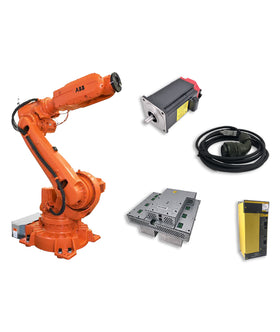
Key components commonly involved in issues and replacements.


{"one"=>"Seleccione 2 o 3 artículos para comparar", "other"=>"{{ count }} de 3 artículos seleccionados"}
Seleccione el primer artículo para comparar
Seleccione el segundo artículo para comparar
Seleccione el tercer elemento para comparar
Dejar un comentario