Quick Fix for FANUC SRVO-050
If SRVO-050 (Collision Detect) appears, try these immediate actions:
- Release the emergency stop and reset the alarm
- Move the robot away from the collision point in jog mode
- Check for mechanical obstruction or interference
- Reduce override speed and retry motion
- Inspect torque load and payload settings
These steps can quickly restore operation if the collision was temporary or minor.
What is FANUC SRVO-050 Collision Detect?
FANUC Alarm SRVO-050 (Collision Detect) occurs when the robot detects abnormal torque or resistance during motion.
The system interprets this as a potential collision to protect:
- Robot structure
- Servo motors and gearboxes
- End-of-arm tooling (EOAT)
When triggered, the robot immediately stops to prevent mechanical damage.
What Does SRVO-050 Mean?
SRVO-050 means the servo system has detected torque exceeding the expected limit.
This typically indicates:
- Physical collision with an object
- Unexpected resistance in robot movement
- Incorrect payload or motion parameters
- Internal mechanical or servo issues
Common Causes of FANUC SRVO-050
Mechanical Collision or Obstruction
Physical interference is the most common cause.
Common issues include:
- Robot hitting fixtures, tooling, or workpieces
- Incorrect path programming
- Workspace layout changes without program updates
Removing obstructions and correcting robot paths resolves most collision alarms.
Incorrect Payload or Tool Data
Improper payload configuration can trigger false collision detection.
Common issues include:
- Incorrect payload weight settings
- Wrong center of gravity (COG) values
- Tool data mismatch after EOAT change
Correct payload configuration ensures accurate torque monitoring and avoids false alarms.
Excessive Mechanical Resistance
High resistance in robot joints can trigger collision detection.
Common issues include:
- Worn gearboxes or bearings
- Lack of lubrication
- Axis stiffness or binding
Maintaining mechanical components reduces unnecessary torque spikes.
Servo Motor or Amplifier Abnormality
Servo system faults can also trigger collision alarms.
Common issues include:
- Servo motor overload
- Amplifier instability
- Abnormal current or torque feedback
Inspecting and replacing faulty servo components restores stable operation.
Programming or Speed Issues
Aggressive motion parameters may exceed safe limits.
- Excessive speed or acceleration
- Sudden direction changes
- Poorly optimized motion paths
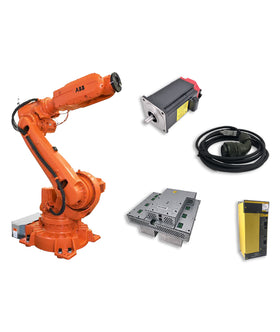
Recommended Parts for SRVO-050 Repair
The following components are commonly required when resolving repeated SRVO-050 alarms:
-
FANUC Servo Motors
→ Required if abnormal torque or mechanical resistance is detected
-
FANUC Servo Amplifiers (Alpha i / Beta i Series)
→ Needed when torque feedback or drive control becomes unstable
-
FANUC Gearboxes and Mechanical Components
→ Used when mechanical wear or binding causes resistance
Browse available FANUC spare parts at inrobots.shop for fast replacement and global delivery.
How to Troubleshoot FANUC SRVO-050
Step 1: Identify Collision Location
- Check alarm message for axis information
- Visually inspect robot position
Step 2: Remove Obstruction
- Clear any physical interference
- Ensure safe working area
Step 3: Verify Payload Settings
- Check payload weight and center of gravity
- Update tool data if necessary
Step 4: Test Robot Motion
- Jog robot at low speed
- Observe for abnormal resistance
Step 5: Inspect Mechanical Components
- Check joints for stiffness
- Inspect lubrication condition
Step 6: Check Servo System
- Inspect servo motor performance
- Verify amplifier status
Step 7: Restart and Monitor
- Reset alarm
- Resume operation at reduced speed
- Monitor for recurrence
Pro Diagnostic Tip
Run the Robot in Low-Speed Manual Mode
- Jog the robot slowly through the motion path where the alarm occurred.
- Observe resistance, torque load, and repeatability of the alarm.
Interpret Results:
-
Alarm occurs at the same position → Likely a mechanical issue (obstruction, binding, or worn components).
-
Alarm occurs randomly → Likely a servo system or parameter-related issue (payload, tuning, or feedback instability).
Why Mechanical and Servo Systems Matter:
-
Mechanical Components (Gearboxes, Bearings, Joints): Wear, poor lubrication, or binding increases torque and triggers collision detection.
-
Payload & Tool Data: Incorrect weight or center of gravity leads to false torque estimation and false collision alarms.
-
Servo Motors & Amplifiers: Abnormal current, unstable torque feedback, or drive issues can trigger false positives.
-
Motion Parameters: High acceleration or abrupt path changes can exceed torque thresholds even without collision.
Next Steps:
- Inspect robot path and remove any mechanical obstruction or interference
- Check and correct payload weight and center of gravity (COG)
- Inspect joints for stiffness, wear, or lubrication issues
- Verify servo motor and amplifier performance
- Optimize speed, acceleration, and motion path programming
- Re-test motion at low speed and monitor torque behavior
How to Fix FANUC SRVO-050
Proven Fix Methods
- Remove physical collision sources
- Correct payload and tool parameters
- Repair or replace worn mechanical components
- Replace faulty servo motor or amplifier
- Optimize robot motion program
Important Note
- If SRVO-050 occurs frequently without visible collision:
- The issue is likely related to payload configuration, servo tuning, or mechanical wear, not an actual collision.
Preventing Collision Detect Alarms
- Regularly verify payload settings
- Maintain proper lubrication of robot joints
- Optimize robot paths and motion speed
- Perform routine mechanical inspections
- Avoid sudden or aggressive motion programming
Related FANUC Alarm Codes
Understanding related alarms helps identify deeper servo or motion system issues.
Conclusion
- FANUC Alarm SRVO-050 – Collision Detect is a protective function designed to prevent mechanical damage.
- By identifying the source of resistance, correcting payload settings, and maintaining mechanical components, stable and safe robot operation can be achieved.
FAQ
What causes SRVO-050 on FANUC robots?
Common causes include mechanical collisions, incorrect payload settings, excessive resistance, or servo system faults.
How do I reset SRVO-050?
Remove the obstruction, correct parameters, and reset the alarm before restarting operation.
Can SRVO-050 occur without a real collision?
Yes, incorrect payload data or mechanical issues can trigger false collision detection.
Is SRVO-050 a serious alarm?
Yes, as it indicates potential mechanical damage risk and stops robot operation.



Dejar un comentario