
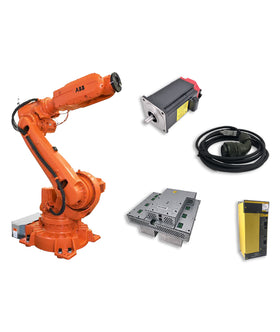


FANUC robots are widely used in industrial automation for their reliability and precision. However, like any complex machinery, they can occasionally encounter faults that disrupt operations. Understanding common FANUC fault codes and their solutions is essential for maintenance teams to quickly diagnose and resolve issues. This guide covers frequent faults faced by FANUC robots and practical steps to troubleshoot and fix them, helping you maintain smooth and efficient robotic operations.
During the operation of devices, power and hardware malfunctions often occur. When there are abnormalities in the power supply system, common symptoms include failure to start, the power indicator turning off, or voltage fluctuations. These issues can be resolved by checking the wiring connections, replacing damaged power cords, or repairing the power module.
For display problems such as screen distortion, dimness, or sticking, it is necessary to inspect the circuit board. If required, replace the liquid crystal screen or the entire display. In case of a black-and-white screen, first adjust the brightness knob; if ineffective, consider initializing the system or replacing the motherboard. When the cooling system fails and causes the device to overheat and shut down automatically, promptly clean the dust from the fan and radiator to ensure unobstructed heat dissipation, and check the coolant circulation. Mastering these methods can effectively address common hardware malfunctions and ensure the normal operation of devices.
During the operation of industrial equipment, malfunctions in servo systems and motion control can significantly impede production efficiency. When a servo overcurrent alarm occurs and the motor stops due to excessive output current, it is essential to inspect the motor's insulation, repair or replace faulty motors, verify the phase sequence of power cables, and adjust servo parameters to match the motor specifications.
If the equipment experiences unstable axis movement, decreased accuracy, or fails to return to the reference point, a thorough check of mechanical components like lead screws and couplings for looseness or wear is required. Additionally, calibrating encoder and grating scale feedback signals and optimizing motion parameters can resolve these issues. When encoder failures lead to signal loss or abnormal data, cleaning the contacts or replacing the encoder, along with checking and fixing cable breaks, are effective solutions. Mastering these methods ensures the stable operation of industrial equipment by promptly addressing common malfunctions.
During the operation of industrial equipment, failures related to parameter and software configuration often lead to abnormal equipment operation and affect production efficiency.
Incorrect parameter settings are a common issue, manifesting as abnormal program execution, axis movement exceeding limits, or loss of functionality. These problems usually result from human misoperation or improper parameter modification. To address such issues, it is necessary to carefully cross - reference with the parameter manual. One can attempt to restore factory settings or re - input correct parameters. Additionally, regularly backing up parameters to a CF card can prevent data loss caused by battery failure.
Program errors and software conflicts can cause program interruptions or logical errors during the machining process. To solve this, the built - in "Program Check" function of the system can be used to detect syntax errors. Rewriting the program to ensure that G - codes and M - codes meet the specifications of the machine tool can eliminate conflicts.
Corrupted system files or outdated versions can cause frequent system freezes or abnormal functionality. In this case, the system firmware should be promptly updated to the latest version to fix known vulnerabilities. Using diagnostic tools to scan the system and repair damaged files can ensure stable system operation. Mastering these handling methods can effectively deal with parameter and software configuration failures and maintain the normal operation of equipment.

During equipment operation, mechanical and operational failures can significantly impact production stability and efficiency. When the mechanical load is excessive, servo motors often trigger overload alarms, typically caused by dull cutting tools or unreasonable machining parameters. To address this, it is necessary to promptly replace worn - out tools, optimize cutting parameters, and appropriately extend acceleration and deceleration times to reduce instantaneous load pressure.
Improper operation and lack of maintenance are also common issues, leading to problems such as accidental emergency stop activation, insufficient lubrication, and debris accumulation. The key to solving these problems lies in strengthening operator training and strictly standardizing operation procedures to prevent dangerous operations like over - travel. Additionally, establishing a regular maintenance mechanism, timely cleaning debris inside the machine tool, and lubricating guide rails and bearings can reduce failures from the source, ensuring the safe and efficient operation of the equipment.
Preventive maintenance is crucial for enhancing the reliability of CNC equipment. In terms of regular upkeep, monthly inspections should cover cable connections, joint tightness, and the performance of the cooling system, with timely removal of dust accumulation and blockages. Annual calibration of sensors and servo parameters ensures control accuracy.
Effective spare parts management is indispensable. Stockpiling vulnerable components like batteries and servo modules enables quick replacements upon failure, significantly reducing downtime. Additionally, environmental factors cannot be overlooked. Stable workshop temperature, humidity, and a clean working environment effectively prevent electrical systems from being damaged by dust and oil.
When troubleshooting Fanuc CNC systems, a systematic analysis following a simple - to complex principle is required. For complex malfunctions, professional support is recommended. Adhering to standardized maintenance and operation practices can significantly reduce equipment failure rates, providing a solid guarantee for production efficiency and machining quality.
Explore the Full Guide: Industrial Robot Fault Codes Library → FANUC Alarm Codes
Explore the complete guide for troubleshooting, repair strategies, and component replacement across industrial robot systems.
Key components commonly involved in repair guides issues and replacements.


{"one"=>"Seleccione 2 o 3 artículos para comparar", "other"=>"{{ count }} de 3 artículos seleccionados"}
Seleccione el primer artículo para comparar
Seleccione el segundo artículo para comparar
Seleccione el tercer elemento para comparar
Dejar un comentario