



A servo feedback error occurs when the robot controller can no longer receive, process, or verify stable position feedback from the motor encoder system.
Industrial robots rely on closed-loop servo control to calculate:
When encoder feedback becomes unstable, the controller may immediately stop robot motion to prevent:
Typical results include:
Although these alarms are often described as encoder failures, the encoder itself is not usually the root cause.
In real factory environments, most recurring servo feedback problems originate from instability somewhere in the feedback signal chain, especially the encoder cable and communication pathway.
Servo feedback problems often begin intermittently before becoming permanent failures.
Typical field symptoms include:
In many robots, the issue only appears while the robot is moving because cable flexing changes signal continuity dynamically.
Servo feedback systems continuously transmit encoder data between:
This feedback loop allows the controller to verify actual axis position in real time.
If signal quality degrades, the controller may lose confidence in motion accuracy and trigger:
Because industrial robots operate at high speeds and high torque, even brief feedback interruptions can force an emergency stop condition.
Different robot manufacturers use different servo architectures, but the failure patterns are often similar.
Common ABB feedback-related alarms include:
These alarms commonly involve:
Related troubleshooting topics naturally include:
Typical FANUC alarms include:
FANUC systems commonly rely on:
Frequent weak points include:
Related resources include:
Common KUKA feedback alarms include:
KUKA feedback systems commonly involve:
Typical failure points include:
Related topics include:
One of the most common Yaskawa alarms is:
Yaskawa systems commonly rely on:
Frequent failure causes include:
Related resources include:
Encoder cables operate under constant mechanical stress inside industrial robots.
Typical environmental stress includes:
Over time, this causes:
In high-cycle robotic systems, encoder cable fatigue is statistically the leading cause of recurring servo feedback alarms.
Loose or oxidized connectors degrade signal integrity and create intermittent feedback instability.
Common failure locations include:
These faults often appear only during motion or vibration.
Damaged shielding allows EMI noise to interfere with encoder signals.
Common EMI sources include:
High-speed robot motion amplifies the effect of signal instability.
Actual encoder hardware failure is less common than cable-related faults.
Possible causes include:
These problems can produce symptoms nearly identical to cable failure.
Field service experience consistently shows:
A large percentage of recurring servo feedback errors originate from encoder cable degradation rather than encoder hardware failure.
Replacing an encoder or motor often requires:
By comparison, replacing a damaged encoder cable is usually faster, lower risk, and significantly less expensive.
This is why cable diagnos is should always happen before replacing motors or servo amplifiers.
Determine whether the issue is:
Intermittent motion-related alarms strongly suggest cable fatigue.
Move the robot slowly through different positions while monitoring alarms.
Focus especially on:
If alarms appear only at specific positions, internal conductor damage is highly likely.
Check for:
Minor connector instability can create major feedback communication problems.
Inspect:
Poor shielding often creates intermittent high-speed motion alarms.
Temporary cable substitution is often the fastest confirmation method.
If the alarm disappears after replacement, the feedback signal chain is confirmed as the root cause.
| Condition | Recommended Action |
| Intermittent feedback alarms | Replace encoder cable |
| Alarm triggered during motion | Inspect cable flex fatigue |
| Multiple axes affected | Check grounding and shielding |
| After robot collision | Replace cable and inspect encoder |
| Persistent fault after cable replacement | Inspect encoder or servo drive |
When servo feedback errors occur repeatedly:
In many cases, restoring stable signal transmission resolves the issue without replacing expensive servo hardware.
For long-term reliability, encoder cables used in industrial robots should include:
Standard commercial cables are not designed for continuous robotic motion environments.
To reduce unexpected servo feedback failures:
Preventive replacement is especially important in:
Yes, but the alarm will usually return if the underlying signal problem remains unresolved.
No. In most cases, the issue is related to the encoder cable, connector, or signal transmission path.
Robot motion changes cable stress conditions. Internal conductor fatigue often causes intermittent signal interruption during bending.
Yes. Shared grounding or shielding instability can affect multiple axes or communication systems simultaneously.
Very urgent. Unstable feedback signals can lead to:
Additional topics that naturally support servo feedback diagnostics include:
Explore the Full Guide: Industrial Robot Knowledge Hub → Repair & Troubleshooting Cluster
Explore the complete guide for troubleshooting, repair strategies, and component replacement across industrial robot systems.
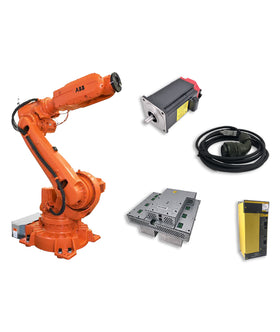
Key components commonly involved in servo feedback error issues and replacements.


{"one"=>"Wählen Sie 2 oder 3 Artikel zum Vergleichen aus", "other"=>"{{ count }} von 3 Elementen ausgewählt"}
Wählen Sie das erste zu vergleichende Element aus
Wählen Sie das zweite zu vergleichende Element aus
Wählen Sie das dritte Element zum Vergleichen aus
Einen Kommentar hinterlassen