Error Code Overview
-
Error Code: KSS01406
-
Category: Motion / Motor Protection
-
Severity: High
-
System: KRC4 / Servo Motors / KSP Drives
-
Impact: axis motion stopped, motor temperature exceeded safe operating limit
Quick Fix for KUKA KSS01406
If KSS01406 appears, take the following immediate actions:
Stop Robot Operation Immediately
- Halt all motion to prevent further thermal damage
- Do not continue cycling while the alarm is active
Allow the Motor to Cool Down
- Wait until motor temperature returns to a safe range
- Restarting too early may trigger the fault again immediately
Inspect Cooling and Ventilation
- Check cabinet cooling fans
- Verify ventilation openings are not blocked
- Remove dust buildup restricting airflow
Reduce Robot Load Temporarily
- Lower speed and acceleration
- Reduce payload if possible
- Test under lighter operating conditions
Check Motor Cables and Connections
- Inspect motor power cables
- Verify encoder / feedback cable integrity
- Reseat loose connectors
Field Tip:
Many temporary overheating faults clear after cooldown, but repeated alarms usually indicate an underlying mechanical or electrical issue.
What Is KUKA KSS01406 Motor Overheating Error?
KUKA KSS01406 indicates that one or more servo motors have exceeded the allowable thermal limit set by the controller.
Th is protection mechanism prevents damage caused by excessive motor heat, including:
- Motor winding insulation failure
- Encoder overheating
- Permanent servo motor damage
- Fire or thermal safety hazards
When the fault occurs, the controller places the affected axis into protective shutdown.
Typical system effects include:
- Motion stops automatically
- Affected axis cannot move
- Restart may be blocked until temperature stabilizes
Common Symptoms
Operators often report the following symptoms before or during KSS01406:
- SmartHMI displays motor overheating alarm
- One axis stops unexpectedly during operation
- Robot slows down before faulting
- axis movement becomes inconsistent under load
- Additional drive or thermal alarms appear together
Field Tip:
If overheating affects only one axis, the issue is often localized to the motor, brake, or cable. If multiple axes overheat together, inspect cabinet cooling and drive load conditions.
Common Causes of KSS01406
Excessive Load or Payload
Overloading the robot is one of the most common causes of motor overheating.
Possible reasons include:
- Payload exceeds rated specification
- Incorrect tool weight settings
- Improper center of gravity configuration
Cooling System Failure
Poor cabinet airflow can trap heat inside the control system.
Typical causes include:
- Failed cooling fans
- Blocked ventilation filters
- Dust accumulation inside cabinet
Continuous High-Speed Operation
Aggressive duty cycles can generate excess motor heat.
Examples include:
- Long production cycles without rest
- Constant high acceleration/deceleration
- Repetitive heavy torque movement
Motor or Cable Problems
Electrical resistance issues may create abnormal heat buildup.
Examples include:
- Damaged motor windings
- Worn insulation
- Loose power connections
- Faulty encoder / feedback cable
Drive Module Stress
Servo drive issues may force excess current into the motor.
Possible causes:
- Overloaded KSP drive
- Faulty KPP power module
- Incorrect drive parameter settings
Recommended Replacement Parts
Parts commonly inspected or replaced include:
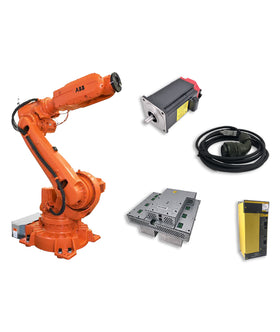
- KUKA Servo Motors (axis Specific)
- Motor power cables
- Motor feedback / encoder cables
- Cooling fans / ventilation assemblies
- KUKA KSP Servo Drives
- KUKA KPP Power Supply Modules
Compatibility Tip:
Always confirm motor type, axis number, and KSS software version before ordering replacement parts.
Troubleshooting Steps
Step 1 – Identify the Overheating axis
- Open SmartHMI diagnostics
- Navigate to axis Temperature Monitoring
- Compare temperature values across all axes
Step 2 – Inspect Cooling System
- Verify all cabinet fans are operating
- Check airflow through vents
- Clean filters and dust buildup
Step 3 – Verify Payload Settings
- Confirm actual payload matches programmed value
- Check tool center of gravity settings
- Reduce load for testing
Step 4 – Inspect Motor and Cable Condition
- Check cable insulation and connectors
- Measure motor winding resistance
- Inspect for abnormal wear or damage
Step 5 – Evaluate Servo Drive Performance
- Review KSP/KPP LED status
- Monitor drive current output
- Check for overload or current spikes
Step 6 – Perform Controlled Motion Test
- Run affected axis at low speed
- Monitor temperature increase rate
- Rapid temperature rise usually indicates motor or drive fault
How to Fix KUKA KSS01406
Dependingon the root cause, repair may involve:
Mechanical / Programming Adjustments
- Reduce payload
- Optimize motion path
- Lower acceleration and speed
Cooling Improvements
- Replace faulty cooling fans
- Improve cabinet airflow
- Lower ambient operating temperature
Electrical Repairs
- Replace damaged cables
- Repair loose electrical connections
Hardware Replacement
- Replace overheating servo motor
- Replace faulty KSP / KPP module
Pro Diagnostic Tips
Experienced technicians often use these methods:
- Monitor live motor temperatures in SmartHMI
- Compare temperature rise across all axes
- Use thermal imaging to identify hotspots
- Check brake drag or mechanical binding
- Review long-term overheating patterns
Field Tip:
Single-axis overheating usually points to motor, cable, brake, or mechanical drag—not system-wide drive failure.
Prevention & Maintenance
Prevent future KSS01406 alarms with routine maintenance:
- Maintain cabinet cooling system regularly
- Avoid continuous overload conditions
- Inspect cables and motors periodically
- Optimize robot motion profiles
- Monitor long-term temperature trends
Recommended Inspection Schedule:
-
Monthly: Inspect cooling fans and airflow
-
Quarterly: Review temperature logs
-
Semi-Annually: Test motor and cable condition
Related Errors
Motor & Thermal Errors
Drive Errors
Torque / Load Errors
FAQ
Can I continue running the robot after KSS01406?
No. Continuing operation while overheating may cause permanent motor damage.
How long should I wait before restarting?
Wait until the motor temperature returns to normal operating range.
Is KSS01406 caused by environment or hardware?
Both are possible. High ambient temperature suggests environmental causes, while repeated overheating may indicate motor or cable failure.
Should I replace the motor immediately?
Not always. Replace the motor only if overheating continues after cooling, load reduction, and inspection.
Final Thoughts
KUKA KSS01406 is a critical thermal protection fault indicating that servo motor temperature has exceeded safe operating limits.
While temporary overheating may result from aggressive production cycles or environmental heat, repeated KSS01406 alarms usually point to deeper issues such as overload, cooling failure, motor degradation, or drive problems.
A structured diagnostic process—starting with temperature monitoring, cooling inspection, and load verification—can help identify the root cause quickly and prevent unnecessary motor replacement.




Leave a comment on this topic