
Skip to content

Yaskawa A.710 Overcurrent Alarm: Causes, Troubleshooting & Repair Guide

Error Code Overview

  • Alarm Code: A.710
  • Alarm Type: Overcurrent Alarm
  • Category: Servo / Drive System
  • Severity: High(can stop robot instantly)
  • Related System: Servo motor, servo drive, power cables

When your Yaskawa system displays the Yaskawa A.710 overcurrent alarm, it means the servo drive has detected an abnormal current spike and stopped the system to prevent damage.

This is one of the most common and critical Yaskawa alarms, often related to electrical faults, motor issues, or sudden mechanical load changes.

If you are looking for a complete overview of all alarm types, you can refer to the Yaskawa Alarm Codesto understand how different faults are connected.

What Does A.710 Alarm Mean?

The A.710 alarm occurs when the servo system detects excessive current flow in a short period of time.

In simple terms:

The system sees a sudden electrical surge and shuts down immediately to protect the motor and drive.

This is what makes A.710 different from:

  • A.710 (overcurrent → sudden spike)
  • A.720(overload → continuous stress)

Quick Fix (5-Minute Check First)

Before deep troubleshooting, try th is:

  • Power cycle the controller
  • Check for sudden collision or impact
  • Reduce acceleration and speed temporarily
  • Inspect cables for visible damage

If the alarm appears instantly at motion start → It is likely electrical or impact-related, not continuous load.

Common Symptoms

  • Alarm triggers instantly at startup or movement
  • Robot stops abruptly without gradual slowdown
  • Occurs during rapid acceleration or sudden direction change
  • May appear randomly without sustained load
  • Sometimes accompanied by abnormal noise or vibration

Main Causes of A.710 Alarm

1. Sudden Mechanical Shock / Collision (Most Common)

  • Robot hits an object or fixture
  • Unexpected external force
  • Sudden stop under high speed

This is the most frequent real-world trigger.

2. Electrical Issues (Cables / Power Instability)

  • Damaged motor cables
  • Short circuit or insulation breakdown
  • Loose connectors

Key sign: Alarm appears instantly even without heavy load.

3. Servo Drive or Control Issue

  • Current detection circuit abnormal
  • Drive output instability
  • Faulty control response

Less common, but possible if mechanical side is normal.

4. Motor Internal Fault

  • Internal winding damage
  • Short circuit inside motor
  • Insulation degradation

5. Aggressive Motion Parameters

  • Acceleration too high
  • Sudden torque demand spikes
  • Improper servo tuning

How to Troubleshoot Yaskawa A.710 Alarm

A.710 troubleshooting should always start with system isolation, not parameter adjustment, because most cases are hardware-driven.

Step 1 – Identify When the Alarm Appears

  • Instantly at startup→ electrical or wiring issue
  • During sudden motion→ acceleration or collision
  • Random occurrence→ possible cable or drive instability

Step 2 – Check for Collision or Mechanical Shock

  • Inspect robot path and tooling
  • Look for signs of impact
  • Review recent program changes

Even a brief collision can trigger A.710 immediately.

Step 3 – Inspect Cables and Connections

Check for:

  • Cable wear or breakage
  • Loose connectors
  • Insulation damage

If needed, inspect your existing <a href="/ru/collections/yaskawa-cables">Yaskawa motor cables</a> for stability and signal integrity.

Step 4 – Reduce Motion Parameters

  • Lower acceleration
  • Reduce speed
  • Smooth motion path

If alarm disappears, parameter spike is the cause.

Step 5 – Isolate Motor vs Drive

  • Swap motor (if available)
  • Test with another axis or drive

Result:

  • Alarm follows motor → motor issue
  • Alarm stayson axis → drive or wiring

Step 6 – Evaluate Servo Drive

Check:

  • Output stability
  • Current fluctuation
  • Error logs

Key Diagnostic Signs of Yaskawa A.710 Overcurrent Fault

  • Instant A.710 at power-on → likely motor short or drive failure
  • A.710 during motion → mechanical load or friction issue
  • Intermittent A.710 → cable or feedback instability
  • Persistent A.710 with no load → drive internal fault

Recommended Parts for A.710 Repair

Once the root cause is confirmed, the issue is usually related to one of the following components:

Servo Motors
If the motor shows signs of internal short, abnormal current draw, or instability, replacement may be required. Choosing a compatible model from your Yaskawa servo motors range ensures proper current handling and system stability.

Servo Drives
If current regulation becomes unstable or faults persist after motor and cable checks, Yaskawa servo drive may be the source. This is less common but critical in unresolved cases.

Motor Cables (High Priority Check)
Unlike A.720, cables are a major factor for A.710. Damaged wiring can directly cause current spikes. Inspect or replace faulty Yaskawa motor cables to eliminate intermittent electrical faults.

Yaskawa A.710 Alarm: Replace or Repair Decision Guide

Repair (Common Cases)

  • Cable replacement
  • Parameter adjustment
  • Removing collision risk

Most A.710 issues can be resolved without major hardware replacement.

Replace

  • Motor shows internal short or instability
  • Drive cannot regulate current properly
  • Fault persists after all external checks

Replacement ensures safe and stable operation under dynamic conditions.

Prevention Tips

  • Avoid sudden acceleration spikes
  • Optimize motion path and tuning
  • Regularly inspect cables and connectors
  • Prevent collision through proper programming
  • Monitor electrical stability

Related Yaskawa Alarm Codes

If you're seeing similar issues, you may also encounter:

Understanding these Yaskawa Alarm Codes can help identify the true root cause.

FAQ

Can I ignore A.710 if it happens occasionally?

No. It indicates electrical stress or instability that can damage components.

Is A.710 caused by overload?

Not directly. It is caused by instantaneous current spikes, not continuous load.

Should I replace the servo drive first?

No. Always check cables and motor before replacing the drive.

Can parameter tuning fix A.710?

Yes, if caused by aggressive acceleration or motion spikes.

Explore the Full Guide: Industrial Robot Fault Codes Library  →  Yaskawa Alarm Codes

Explore the complete guide for troubleshooting, repair strategies, and component replacement across industrial robot systems.

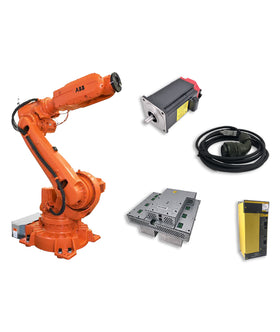
🔧 Recommended Parts for Yaskawa Alarm Troubleshooting

Key components commonly involved in yaskawa alarm troubleshooting issues and replacements.

📘 Related Resources for Yaskawa Alarm Codes
  • No related articles found in this topic.
Previous article UR TCP Not Accurate | Universal Robots TCP Accuracy Diagnostic Guide

Leave a comment on this topic

* Required fields

Blog posts

Compare products

{"one"=>"Select 2 or 3 items to compare", "other"=>"{{ count }} of 3 items selected"}

Select first item to compare

Select second item to compare

Select third item to compare

Compare