



Field insight:
In real-world applications, the Yaskawa A.820 regenerative error is usually caused by excessive regenerative energy generated during braking or deceleration — not random servo drive failure.
In most cases, the problem occurs because the system cannot dissipate braking energy fast enough, causing DC bus voltage to rise beyond safe limits.
The Yaskawa A.820 alarm occurs when excess voltage builds up inside the DC bus during motor deceleration.
In simple terms:
When the motor slows down, it temporarily acts like a generator and sends energy back into the servo drive.
If th is energy cannot be absorbed or dissipated properly, voltage rises and the system triggers protection.
This is what differentiates A.820 from other Yaskawa alarms:
Before deep troubleshooting, try th is:
If the alarm disappears after reducing deceleration → the issue is likely excessive regenerative energy.
A.820 faults typically originate from one of four system layers:
The braking resistor is responsible for dissipating regenerative energy as heat.
The regenerative resistor dissipates braking energy as heat.
Common failure conditions include:
If the resistor cannot absorb braking energy, DC bus voltage rises rapidly during deceleration.
Inside the servo drive, the regeneration circuit controls excess energy flow.
Common causes include:
In aging systems, internal servo drive degradation is a common cause of persistent A.820 alarms.
Even minor connection instability can reduce energy dissipation efficiency.
These conditions generate more regenerative energy than the system can safely absorb.
In some situations, unstable deceleration may also trigger speed-related faults.
If abnormal motion occurs during braking, reviewing Yaskawa A.840 overspeed error troubleshooting may help identify related motion control instability.
Unlike overload alarms, A.820 troubleshooting should focuson braking energy dissipation and deceleration behavior.
If the alarm disappears after adjusting deceleration parameters, the issue is configuration-related rather than hardware failure.
Inspect:
A failed resistor cannot absorb braking energy.
Check:
High inertia directly increases regenerative energy during braking.
If excessive load is suspected, reviewing Yaskawa A.720 overload alarm troubleshooting may help identify additional mechanical stress issues.
In some cases, unstable incoming power may worsen DC bus overvoltage conditions.
Reviewing Yaskawa A.750 power supply alarm troubleshooting may help identify related electrical instability.
If voltage regulation remains unstable after resistor and parameter checks, the servo drive may be degraded internally.
|
Symptom |
Likely Cause |
|
Alarm during deceleration |
Excess regenerative energy |
|
Frequent at high speed |
Parameter issue |
|
Occurs under normal operation |
Resistor failure |
|
Random voltage-related alarms |
Power supply issue |
If the resistor is damaged or undersized, it cannot absorb braking energy effectively.
Replacing or upgrading the resistor is often the fastest solution.
If regenerative voltage control becomes unstable, the Yaskawa servo drive may require repair or replacement.
In high-inertia systems, properly matched Yaskawa servo motors help maintain stable braking and motion control performance.
Although less common, unstable electrical transmission can contribute to abnormal regenerative conditions.
Inspect Yaskawa motor cables and power cables if electrical instability is suspected.
Most A.820 alarms are resolved through resistor replacement or parameter optimization.
Replacement is recommended when voltage stability cannot be restored after tuning and resistor verification.
Understanding Yaskawa Alarm Codes helps isolate root causes more efficiently:
These alarms are frequently interconnected in high-speed robotic applications.
Brake resistor failure and servo drive regeneration circuit degradation are the most common causes.
Yes. Excessively short deceleration time can generate excessive regenerative energy.
Check resistance value and inspect for physical burn damage or open circuit.
Not recommended. It will likely cause repeated A.820 alarms and potential DC bus damage.
When A.820 alarms persist after resistor, wiring, and parameter issues have been ruled out.
Explore the Full Guide: Industrial Robot Fault Codes Library → Yaskawa Alarm Codes
Explore the complete guide for troubleshooting, repair strategies, and component replacement across industrial robot systems.
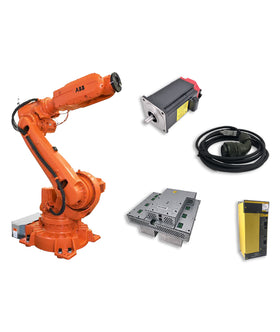
Key components commonly involved in yaskawa alarm troubleshooting issues and replacements.


{"one"=>"Selecione 2 ou 3 itens para comparar", "other"=>"{{ count }} de 3 itens selecionados"}
Selecione o primeiro item para comparar
Selecione o segundo item para comparar
Selecione o terceiro item para comparar
Deixe um comentário