



When a Universal Robots system repeatedly stops during production, the root cause is rarely random.
On real production lines, stops are usually repeatable once the correct failure layer is identified.
The important diagnostic question is not:
“What alarm appeared?”
but:
“Which system layer lost timing consistency first?”
In many field cases, the robot itself is mechanically healthy. The interruption begins somewhere inside:
This is why some robots:
The failure is often timing-dependent rather than hardware-destructive.
A practical diagnostic approach is to separate the system into four interacting layers:
Once the unstable layer is isolated, troubleshooting becomes significantly faster.
UR safety logic reacts extremely quickly to timing inconsistencies.
The controller does not “wait to confirm” whether a signal interruption is serious. If the expected timing relationship breaks, motion is stopped immediately.
Typical validation timing windows include:
Even very small disturbances can become valid stop triggers, including:
A common field pattern looks like this:
In many situations, the robot itself is operating correctly.
The controller is simply detecting that safety timing integrity was briefly lost somewhere in the chain.
This is why replacing mechanical parts rarely solves intermittent Safety Stops caused by signal instability.
Many UR production stops happen only after the robot begins moving dynamically under real payload conditions.
In these cases, the issue is frequently related to motion-model deviation rather than external safety wiring.
UR controllers continuously compare:
When the deviation becomes too large, motion is interrupted immediately to prevent uncontrolled behavior.
This comparison is happening continuously during runtime.
Engineering representation:
ΔT=Texpected−Tactuallta
A common real-world scenario is:
Engineers also frequently encounter:
One important diagnostic clue is that the robot may jog perfectly at low speed while repeatedly stopping during production cycles.
That behavior usually indicates model inconsistency under dynamic load rather than catastrophic servo failure.
Not all repeated runtime stops originate from motion or safety logic.
In integrated production cells, communication timing instability is extremely common.
The robot may appear mechanically healthy while synchronization timing slowly drifts between systems.
Common sources include:
At the PLC layer, these failures often look random.
At the controller layer, however, the issue is usually accumulated timing instability.
Inside UR systems, network delay can gradually affect:
A very common field pattern is:
This is especially common in heavily integrated production lines where multiple systems exchange real-time data simultaneously.
When no clear mechanical or safety trigger exists, controller state integrity becomes important.
This layer is often overlooked because the robot may appear externally healthy.
However, runtime inconsistency inside the controller can still interrupt motion execution.
Common triggers include:
These failures often develop gradually.
A common progression is:
In many cases, the issue is not mechanical at all.
The controller is losing internal consistency somewhere inside storage or runtime scheduling.
Production stop timing itself is often one of the most valuable diagnostic clues.
When stopping begins almost immediately after enabling motion, engineers often investigate:
The robot may appear operational before runtime dependencies are fully stabilized.
This pattern is extremely common in integrated automation lines.
The robot may initially run correctly, then stop after communication timing drift accumulates.
Field cases often involve:
The delayed timing behavior is the important clue.
When the robot stops only during acceleration, high-speed movement, or payload transition, motion-model deviation becomes much more likely.
Typical causes include:
These issues often remain hidden during low-speed manual testing.
Some runtime interruptions never generate a useful operator-facing alarm.
In these situations, engineers often discover:
These cases require timestamp correlation rather than simple alarm reading.
Accurate diagnos is depends more on correlation than on replacing parts.
During troubleshooting, focus on:
One useful field technique is comparing:
because different failure layers often appear during different motion phases.
For example:
The timing relationship itself is often more valuable than the alarm text.
Not every interruption is a true safety-rated stop event.
A true Safety Stop (Category 0 or Category 1) normally:
If the robot briefly stops and then resumes automatically, the event is more likely:
This distinction is important because the diagnostic direction changes completely.
Many production interruptions occur below application-alarm level.
Common examples include:
These events may never generate a major operator-visible fault.
Yes.
UR safety systems operate on strict timing validation.
Even millisecond-level interruption inside the safety chain can trigger motion stop events.
This strongly suggests motion-model inconsistency.
Common causes include:
Temporary recovery usually indicates intermittent instability rather than permanent hardware destruction.
Typical examples include:
Explore the Full Guide: Industrial Robot Knowledge Hub → Repair & Troubleshooting Cluster
Explore the complete guide for troubleshooting, repair strategies, and component replacement across industrial robot systems.
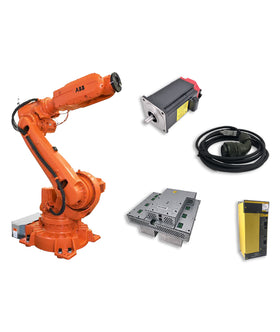
Key components commonly involved in issues and replacements.


{"one"=>"Selecione 2 ou 3 itens para comparar", "other"=>"{{ count }} de 3 itens selecionados"}
Selecione o primeiro item para comparar
Selecione o segundo item para comparar
Selecione o terceiro item para comparar
Deixe um comentário