



In Universal Robots systems, communication errors are not simple connectivity failures. They are typically the result of real-time constraint violations across multiple system layers, where timing instability prevents deterministic data exchange between the controller, external devices, and fieldbus networks.
Unlike standard IT networks, robot communication operates under hard real-time rules. Even when no full disconnection occurs, small timing deviations can trigger safety behavior.
UR robots execute motion and I/O updates under strict cyclic control:
At 500 Hz, each cycle is only 2 ms long. This means the system has extremely limited tolerance for timing variation.
In real-time systems like this:
Stability is determined by worst-case timing behavior, not average network performance.
UR communication safety is based on a Fail-Safe architecture, not a recovery-first network model.
If the controller does not receive valid updates such as heartbeat signals, motion feedback, or I/O cycles:
the system will immediately trigger a protective stop.
There is no continuous retry loop. Instead, the system transitions directly into a safe state to prevent uncontrolled motion.
The watchdog is part of a layered safety chain:
This design ensures that partial communication corruption cannot result in unsafe robot movement.
When logs show “communication watchdog triggered”, the issue is often misdiagnosed as a physical cable or link failure.
In practice, the root cause is frequently network timing instability, not total disconnection.
A common hidden cause is broadcast storm conditions within the network.
A broadcast storm occurs when excessive broadcast traffic floods network devices and consumes bandwidth and processing resources.
Typical triggers include:
In this scenario:
This leads to jitter accumulation and eventual watchdog triggering.
Industrial robot networks must strictly separate operational technology (OT) traffic from information technology (IT) traffic.
Direct connection between robot control networks and office networks introduces unpredictable traffic sources.
Examples of IT traffic that can disrupt real-time control include:
These generate non-deterministic network load, which is incompatible with real-time robotic communication.
If connectivity between OT and IT networks is required:
This ensures deterministic behavior for robot control traffic.

Most UR communication failures are caused by timing instability rather than complete disconnection.
Contributing factors include:
Even small timing variations can accumulate across cycles and violate real-time constraints.
A major but often underestimated cause of instability is the use of commercial-grade Ethernet switches in industrial environments.
Consumer or office-grade switches typically exhibit:
These limitations result in:
Stable UR system operation requires managed industrial Ethernet switches supporting:
In industrial control networks:
Real-time robot traffic must always be prioritized over background broadcast traffic.
All automation devices should use static IP configuration to ensure deterministic communication behavior.
If PLC cycle time is slower than robot communication cycle:
Communication instability may originate inside the controller:
These conditions increase system latency and indirectly affect real-time communication stability.
Verify compatibility between:
Mismatch can result in unstable cyclic communication even when physical connectivity is intact.
For protocols such as:
Avoid overly aggressive cycle settings:
Lower cycle times increase system stress and reduce overall stability.
A key diagnostic distinction:
In most UR fieldbus issues, the root cause is delayed cyclic updates rather than true packet loss.
UR controllers run on a Linux-based operating system. System-level diagnostics are essential for identifying hidden performance issues.
This command is used to inspect low-level network interface health on the controller.
It provides visibility into:
Increasing error counters typically indicate:
These tools are used to monitor real-time system resource usage on the controller.
They help identify:
Key engineering insight:
Even if network communication is stable, excessive CPU load can indirectly affect real-time robot communication cycles.
This command provides real-time statistics for network interfaces at the kernel level.
It is commonly used to monitor:
Key diagnostic value:
It helps identify whether communication instability is caused by gradual interface degradation rather than sudden network failure.
In real-time systems like Universal Robots controllers, average latency is not a reliable metric.
What matters is worst-case behavior.
For e-Series systems:
Therefore:
Any packet delay exceeding 2–4 ms can already violate real-time constraints and trigger watchdog behavior.
A system can show:
These outliers are the real trigger for watchdog events.
The communication path can be modeled as:
PLC → Switch → Controller Network Interface → Real-Time Runtime → Motion Control System
Failures can occur at any layer, but symptoms are often observed only at the application level, hiding the true origin.
If the system behaves normally after reboot but fails after a consistent runtime period:
Common causes include:
This pattern typically indicates system-level degradation rather than hardware failure.
For fast classification:
In most Universal Robots systems, communication errors are not caused by complete network failure.
They are typically the result of:
Understanding these mechanisms is essential for accurate diagnos is and prevents unnecessary hardware replacement when the root cause lies in system architecture rather than physical components.
This error occurs when the controller fails to receive valid real-time updates within a strict time window (typically 24–40 ms).
In Universal Robots systems, this does not necessarily mean a disconnection. It often indicates:
The system triggers a protective stop to prevent unsafe motion.
Yes. This is one of the most common misconceptions.
UR robots operate under hard real-time constraints (125 Hz–500 Hz). Even if the connection remains active, the system can still fail if:
In these cases, communication is “alive” but not “deterministic.”
For UR systems, jitter is often more dangerous than packet loss because:
A delayed packet can violate real-time deadlines even if no data is missing.
Yes, in most production environments.
Commercial switches may fail under industrial cyclic loads due to:
Industrial managed switches with QoS and IGMP Snooping are recommended to ensure deterministic communication.
Explore the Full Guide: Repair & Troubleshooting Cluster → UR Communication Error
Explore the complete guide for troubleshooting, repair strategies, and component replacement across industrial robot systems.
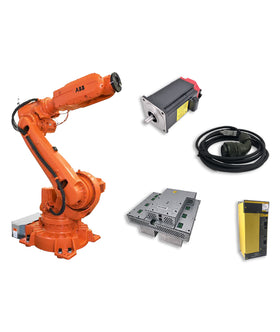
Key components commonly involved in ur communication error issues and replacements.


{"one"=>"Selecione 2 ou 3 itens para comparar", "other"=>"{{ count }} de 3 itens selecionados"}
Selecione o primeiro item para comparar
Selecione o segundo item para comparar
Selecione o terceiro item para comparar
Deixe um comentário