

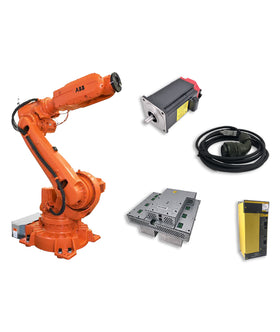


With the rise of smart manufacturing and precision automation, servo drives have become indispensable in high-performance motion control systems. Whether it’s CNC machines, robotics, or industrial automation lines, servo drives are critical for precise torque, speed, and position control.
But with their increasing complexity and constant operation, servo drives are highly vulnerable to environmental and thermal stresses—especially during hot seasons. According to field data, over 40% of servo drive failures are heat-related, many of which are preventable with regular maintenance.
This article offers practical maintenance tips to help you prevent unexpected shutdowns, reduce costly downtime, and extend the service life of your servo systems.

A servo drive is a control device that regulates the power sent to a servo motor based on feedback. It ensures precise motion by adjusting speed, torque, or position in real time. Commonly found in robotics, CNC machines, conveyors, and packaging systems, servo drives are critical to maintaining accuracy, stability, and efficiency in industrial automation.
Common Applications:
CNC machinery
Robotic arms
Conveyor systems
Packaging lines
Semiconductor fabrication
Printing equipment
Core Features:
High-precision motion control
Fast acceleration and deceleration
Real-time feedback loop (via encoders or resolvers)
Integration with PLC, HMI, and safety systems
Understanding the root causes helps prevent recurrence. The top contributors to servo drive breakdowns include:
| Cause | Impact |
|---|---|
| Overheating | Shortens lifespan of IGBT modules and capacitors |
| Dust accumulation | Triggers short circuits or cooling inefficiency |
| Poor grounding | Causes signal interference or electrical damage |
| Voltage fluctuations | Damages internal circuits and power supplies |
| Loose connections | Leads to intermittent control or complete failure |
| Aging components | Causes drifting parameters or fault alarms |
| External shock or vibration | Cracks PCBs and damages solder joints |
Tip: More than 30% of drive failures occur due to poor ventilation or blocked filters—simple issues that regular inspection can easily catch.
Here's a concise text checklist of best practices for keeping your servo drives in top shape:
1. Basic Inspection and Cleaning
Start by measuring the insulation resistance of the servo drive. Check for any loose screws and inspect the exterior for damage. Clean the surface to remove dust and debris. This basic step helps identify potential safety hazards early.
2. Internal Component Inspection
Disassemble the cover and protective parts. Clean and wipe all internal fixed components. Inspect for aging, brittleness, or physical damage—replace any compromised parts. Keeping the interior clean and dry helps prevent failures from dust or moisture buildup.
3. Cooling System Check
Remove oil and dust from the cooling system. Examine the fan for worn bearings, aging blades, or cracks. Listen for abnormal noises during startup, check screw tightness, and measure fan speed. Replace the fan if needed (recommended every 2 years). A functioning cooling system is essential for stable drive operation.
4. PCB Board Maintenance
Clean the circuit board thoroughly to remove dust and oil. Check for signs of aging in the circuits. Apply conformal coating as needed, and replace any degraded PCBs. A clean, well-maintained board ensures reliable servo drive performance.
5. IGBT Testing and Maintenance
Test the IGBT for performance, voltage withstand capacity, and trigger reliability. Conduct temperature checks and reapply thermal paste. If aging signs are present, replace the IGBT. As a core component, its stability directly impacts system performance.
6. Capacitor Evaluation
Measure the main capacitor's capacitance, insulation resistance, and voltage withstand capability. Check for signs of leakage or a bulging safety valve. Replace aged capacitors as needed (typical lifespan is ~20,000 hours). Failing capacitors can cause instability or failure.
7. Contactor and Terminal Inspection
Inspect the main circuit contactor for poor contact and examine terminals for arc marks or corrosion. Replace if necessary. Reliable contact ensures stable power flow.
8. Copper Busbar Insulation Test
Perform insulation checks between the copper busbars and ground, as well as between busbars. Tighten all connections. This ensures safe and stable current transmission.
9. Cable Cleaning and Testing
Clean the servo drive’s wiring and measure both insulation resistance and temperature. Well-maintained and properly insulated cables are essential for safe and efficient operation.
| Frequency | Task | Suggested Tool/Note |
|---|---|---|
| Daily/Weekly | Monitor drive temperature (< 55°C) | Use thermal camera or sensor |
| Listen for odd noises or fan issues | Visual + auditory check | |
| Confirm power LED indicators are normal | Reference user manual | |
| Monthly | Clean cooling filters and vents | Use vacuum or compressed air |
| Check voltage consistency | Multimeter, oscilloscope for ripple check | |
| Grounding verification | Earth resistance tester (< 1Ω preferred) | |
| Quarterly | Inspect capacitors for swelling/leaks | Visual inspection |
| Tighten screws, terminals | Torque screwdriver | |
| Check fan speed | Tachometer or servo drive diagnostics | |
| Semi-Annually | Download and review fault history | Use manufacturer tool (e.g., Yaskawa SigmaWin+) |
| Measure insulation resistance | IR tester | |
| Backup drive settings | SD card or USB interface | |
| Annually | Replace cooling fan (if >2 years) | Refer to model-specific maintenance cycle |
| Test ESR of capacitors | ESR meter | |
| Run complete system test | Factory or field diagnostic tool |
Neglecting servo drive maintenance can lead to:
Overheating failures (especially in summer)
5x higher costs in repairs vs. preventive care
Unplanned production downtime
Proactive maintenance = lower costs + higher equipment reliability.
Before full cleaning:

After full cleaning:

In summary, the maintenance of servo drives is a systematic endeavor that requires comprehensive consideration of multiple aspects. By conducting regular in-depth maintenance on servo drives, not only can their service life and stability be effectively prolonged, but the failure rate can also be significantly reduced, and their performance optimized.
Therefore, enterprises should attach great importance to the maintenance of servo drives, formulate scientific maintenance plans, and strictly enforce them. Meanwhile, they should also strengthen the training and management of operators to enhance their operational skills and maintenance awareness, ensuring the normal operation of servo drives and the smooth progress of production.
Environment Matters: Install in dust-free, low-humidity, temperature-controlled cabinets.
Label Your Units: Track maintenance dates directly on the drives for easier recordkeeping.
Spare Parts: Stock critical spares like fans, fuses, and capacitor kits—reduces downtime by up to 60% during emergency repairs.
Preventive maintenance of servo drives is not optional—it’s a low-cost, high-return strategy. By following a structured checklist and identifying early warning signs, you can avoid costly failures, increase productivity, and ensure your automation system runs smoothly.
Q1: How often should I clean the air filter of my servo drive?
A: At least once a month in dusty environments, or quarterly in clean rooms.
Q2: When should I replace the cooling fan?
A: Typically every 2–3 years, or sooner if RPM drops significantly or noise increases.
Q3: Can I perform insulation resistance tests without disassembling the drive?
A: Most drives require partial disconnection; follow your manufacturer’s service manual for safe testing procedures.
Q4: What are signs that a capacitor needs replacement?
A: Bulging, electrolyte leakage, high ESR, or error codes related to voltage instability.
Q5: Is predictive maintenance software necessary?
A: Not always, but it's helpful for large installations—some systems use AI to predict failure trends based on usage patterns.
Explore the Full Guide: Industrial Robot Spare Parts → Servo Drive & Motor Guide
Explore the complete guide for troubleshooting, repair strategies, and component replacement across industrial robot systems.
Key components commonly involved in servo & motors issues and replacements.


{"one"=>"Selecione 2 ou 3 itens para comparar", "other"=>"{{ count }} de 3 itens selecionados"}
Selecione o primeiro item para comparar
Selecione o segundo item para comparar
Selecione o terceiro item para comparar
Deixe um comentário