



Robot lagging, delayed response, or unstable motion is often mistaken for a servo or controller problem.
In many industrial robot systems, the real issue is hidden inside the communication layer — especially in high-speed data transmission cables and feedback networks.
Unlike complete communication failure, signal degradation usually develops gradually.
The robot may still run, but motion becomes inconsistent, delayed, or unstable under load.
This guide explains how communication cable degradation affects robot motion, why packet loss causes lag without alarms, and how to identify signal integrity problems before replacing expensive hardware.
Robot lag is usually a communication timing issue rather than a pure motion failure.
In industrial control systems (EtherCAT, PROFINET, FSSB, Mechatrolink), robot motion depends on continuous real-time packet exchange between controller, drives, and encoders.
In high-speed robotic communication networks, degraded cables rarely cause complete failure.
Instead, they introduce Packet Loss and increased Latency.
When data packets are dropped or must be retransmitted:
This is why some robots appear electrically normal while behaving unpredictably during production.
| Symptom | Likely Root Layer | Primary Focus |
| Delayed motion start | Communication layer | Data cable integrity |
| Random pauses during motion | Packet loss | Encoder/feedback cable |
| Micro-stuttering | EMI interference | Shielding degradation |
| Lag increases over time | Cable fatigue | High-flex wear |
| Pendant delay | HMI communication line | Teach pendant cable |
In many robot lagging cases, the communication cable system is the actual root cause.
This area is frequently overlooked because the robot still powers on and continues moving.
In industrial robot networks, cables do not need to “break” to cause failure.
Instead, degradation leads to:
Shielding is the first defense line of industrial signal stability.
As robot data cables age under continuous flexing:
Once EMI enters the communication line:
This is one of the most common hidden causes of “random lag”
When lag affects only one axis or appears intermittently, the problem may be located in the encoder feedback path.
Common issues include:
These problems are often misdiagnosed as servo motor failure even though the motor itself is functioning normally.
In many cases, the real issue is unstable signal transmission between the encoder and controller.
Inspect:
Check for:
Only after communication stability is confirmed should you investigate:
In real-world maintenance, servo systems are often replaced unnecessarily before communication problems are properly checked.
Different robot systems fail differently under cable degradation:
| Action | Cost Level | Actual Outcome |
| Replace servo motor | Very high | Problem often persists |
| Replace controller | Extremely high | No improvement |
| Parameter tuning | Low | Temporary masking |
| Replace data cable system | Medium | Root cause resolved |
Communication cable degradation is one of the most commonly overlooked causes of robot motion instability.
Look for these hidden indicators:
These patterns strongly indicate:
packet loss or shielding degradation in communication cables
When motion lag is confirmed to be linked to communication instability, the corrective action must focus on restoring signal integrity across the entire motion network, rather than adjusting control parameters.
In most industrial cases, this involves addressing the robot data communication cable system, where packet loss and EMI contamination typically originate.
Restore communication integrity through the robot data cable system
Industrial Robot Data Cable System
Key engineering objectives:
No. In many industrial systems, lag is caused by communication instability, packet loss, or shielding degradation rather than servo damage.
Heat and vibration can worsen internal cable fatigue, connector instability, and shielding breakdown, increasing packet loss over time.
Usually not. Parameter adjustments may temporarily reduce symptoms, but they cannot repair physical communication degradation.
If the symptom changes after cable movement, repositioning, or temporary reconnection, communication cable instability is highly likely.
Because partial packet loss and latency often remain below the controller’s alarm threshold while still affecting real-time motion quality.
Explore the Full Guide: Industrial Robot Knowledge Hub → Repair & Troubleshooting Cluster
Explore the complete guide for troubleshooting, repair strategies, and component replacement across industrial robot systems.
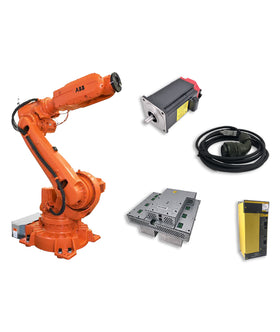
Key components commonly involved in robot lagging delay issues and replacements.


{"one"=>"Selecione 2 ou 3 itens para comparar", "other"=>"{{ count }} de 3 itens selecionados"}
Selecione o primeiro item para comparar
Selecione o segundo item para comparar
Selecione o terceiro item para comparar
Deixe um comentário