


Communication faults are among the most common and most misunderstood problems in industrial robotics.
A robot may suddenly stop, lose servo feedback, trigger a link alarm, or disconnect from peripheral devices — even though the controller itself is still functioning normally.
In many real-world cases, the issue is not a failed controller board.
The root cause is usually unstable signal transmission somewhere in the communication chain:
Because industrial robots depend on continuous real-time data exchange, even a small interruption can trigger protective shutdowns.
This guide explains how communication systems work in FANUC, ABB, KUKA, and Yaskawa robots, how to diagnose communication faults efficiently, and which failures are most commonly overlooked during troubleshooting.
Communication problems can appear differently depending on the robot architecture and communication protocol.
Typical symptoms include:
Intermittent faults are especially dangerous because they often indicate gradual signal degradation rather than complete hardware failure.

Industrial robots rely on high-speed communication between multiple systems simultaneously:
If communication timing becomes unstable, the robot controller may immediately disable servo power to protect motors, drives, and mechanical components.
This is why communication faults frequently appear together with:
Communication stability is directly tied to robot safety and motion control reliability.

Different robot manufacturers use completely different communication architectures.
Understanding the platform design helps narrow down failures much faster.
FANUC robots commonly use:
Typical weak points include:
Common FANUC-related communication problems include:
Related troubleshooting topics naturally connect with:
ABB robot systems commonly rely on:
Frequent failure points include:
ABB communication problems often appear together with:
Related topics include:
KUKA robots commonly use:
Common weak points include:
KUKA systems are particularly sensitive to shielding and grounding quality.
Typical symptoms include:
Related resources include:
Yaskawa systems commonly rely on:
Frequent weak points include:
Because power and communication are closely linked in Yaskawa systems, unstable power conditions may trigger communication alarms even when data wiring appears normal.
Related troubleshooting topics include:
| Brand | Core Communication Protocol | Common Weak Points |
| FANUC | FSSB (Fiber Servo System Bus) | Fiber optic jumper cable, servo amplifier interface, connector contamination |
| ABB | Fieldbus / EtherNet-based communication | DSQC communication board, encoder signal cable, I/O module instability |
| KUKA | EtherCAT (KCB / KEB architecture) | RJ45 shielded Ethernet cable, X20 I/O module, bus coupling errors |
| YASKAWA | MECHATROLINK / Servo Network | Data bus connectors, external 24V control wiring, feedback cable wear |
Communication failures are often architecture-specific, meaning each brand has a different weak point in the signal chain:
Industrial robots rely on high-speed communication between:
When signal integrity degrades, the system triggers protective shutdowns to prevent damage.
This is the single most common root cause.
Typical failures include:
Communication cables often fail internally before visible external damage appears.
This is why intermittent communication alarms are extremely common in aging robots.
Signal cable issues are especially common in:
Electrical noise is a major hidden cause of unstable robot communication.
Common sources include:
If communication alarms appear only during robot motion or motor acceleration, EMI is highly likely.
In these situations:
Proper cable routing and grounding design are critical for stable robot operation.
Industrial environments create constant stress on communication interfaces.
Typical causes include:
Even slight resistance changes can destabilize high-speed communication networks.
Determine whether the issue is:
Intermittent faults usually indicate cable or connector degradation.
Inspect for:
Flex-test suspect cables while monitoring alarms.
If the fault changes during movement, internal conductor damage is likely.
This is often the fastest and most reliable test.
Temporary cable substitution can quickly isolate:
Check:
Poor grounding can create communication instability even when all hardware appears healthy.
Inspect surrounding equipment for:
EMI-related communication failures are often intermittent and difficult to reproduce consistently.
Across FANUC, ABB, KUKA, and Yaskawa systems, a large percentage of communication alarms originate from the same core issue:
Signal degradation inside cables or connectors.
In many factories, technicians replace boards, drives, or controllers before checking the communication pathway itself.
However, aging signal cables are statistically far more likely to fail than the controller CPU.
This is especially true in robots with:
When communication errors occur repeatedly, the most effective corrective action is:
When communication alarms repeat frequently, the most effective corrective actions are usually:
In many cases, these steps restore stability without replacing expensive controller hardware.
Additional related topics that naturally support communication diagnostics include:
No. Most communication faults are caused by unstable signal transmission, cable degradation, shielding problems, or connector failures.
Yes. Internal micro-breaks inside signal cables are one of the most common causes of intermittent communication faults.
This usually indicates:
Motion changes cable stress and electrical noise conditions.
Replace it temporarily with a known-good cable and observe whether the fault disappears.
Absolutely. Poor grounding is one of the leading causes of unstable industrial Ethernet and servo communication systems.
Explore the Full Guide: Repair & Troubleshooting Cluster → Robot Communication Error Diagnos
Explore the complete guide for troubleshooting, repair strategies, and component replacement across industrial robot systems.
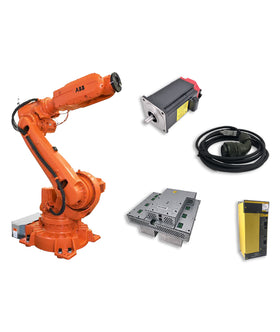
Key components commonly involved in robot communication error diagnos issues and replacements.
No related parts found. Please check available components in our catalog.


{"one"=>"Selecione 2 ou 3 itens para comparar", "other"=>"{{ count }} de 3 itens selecionados"}
Selecione o primeiro item para comparar
Selecione o segundo item para comparar
Selecione o terceiro item para comparar
Deixe um comentário