
Pular para conteúdo

KUKA KSS00002 Safety Stop Error – Causes, Symptoms & How to Fix

Error Code Overview

  • Error Code: KSS00002
  • Category: Safety System / Controlled Stop
  • Severity: Medium to High
  • System: KRC4 Safety Controller / External Safety Devices
  • Impact: Robot motion halted, automatic operation blocked

Quick Fix for KUKA KSS00002

If KSS00002 appears, start with these immediate checks:

Verify Safety Gates and Protective Doors

  • Confirm all guard doors are fully closed
  • Inspect interlock switches for proper alignment
  • Check for damaged or loose safety gate hardware

Check Emergency Stop Buttons

  • Verify all E-stop buttons are fully released
  • Inspect SmartPAD emergency stop button
  • Check external operator station E-stops

Inspect External Safety Devices

  • Ensure light curtains are unobstructed
  • Confirm safety scanners detect no intrusion
  • Verify external protective devices show normal LED status

Reset the Safety System

  • Open SmartHMI Safety Menu
  • Acknowledge the active safety stop
  • Reset the safety circuit

Re-Enable Drives

  • Confirm all safety conditions are restored
  • Attempt to re-enable robot drives

Field Tip:
If KSS00002 appears immediately after a software update or safety logic change, verify the safety configuration in WorkVisual.

What Is KUKA KSS00002 Safety Stop Error?

KUKA KSS00002 indicates that the robot has entered a controlled safety stop due to an active safety input or safety-related interruption.

Unlike an emergency stop, KSS00002 typically commands the robot to stop motion in a controlled manner rather than immediately removing power.

When KSS00002 is active:

  • Robot motion stops safely under controller supervision
  • Automatic mode is disabled
  • Drives may remain powered but inactive
  • Startup is blocked until the safety condition is cleared

Th is fault usually occurs when an external protective device or safety interlock is triggered.

Common Symptoms

Operators commonly notice the following symptoms:

  • Robot stops during motion without emergency shutdown
  • SmartHMI displays KSS00002 Safety Stop Error
  • Drives remainon but movement is disabled
  • Automatic mode cannot be restarted
  • Safety warning remains active after motion stops

Field Tip:
If drives stay powered but the robot cannot move, the fault is more likely KSS00002 than KSS00001.

Common Causes of KSS00002

Safety Gate or Door Open

Safety stop may trigger when:

  • Guard door is open
  • Door switch is misaligned
  • Interlock hardware is damaged

External Safety Device Triggered

Protective sensors may stop the robot if unsafe conditions are detected.

Examples include:

  • Light curtain interruption
  • Safety scanner detection
  • Area intrusion sensor activation

Emergency Stop / SmartPAD Issues

Improper emergency stop hardware may create false safety stop conditions.

Possible causes:

  • Partial E-stop engagement
  • Faulty SmartPAD switch
  • Damaged interface cable

Safety Circuit Wiring Fault

Electrical issues may interrupt the safety loop.

Examples include:

  • Loose terminals
  • Broken wires
  • Short-to-ground faults
  • Dual-channel mismatch

SIB / CIB Module or Safety PLC Fault

Internal control faults may prevent safety validation.

Possible causes include:

  • SIB / CIB board failure
  • Safety PLC logic errors
  • Profinet / EtherCAT safety communication loss

Recommended Replacement Parts

Component

Description

Use Case

KUKA SmartPAD (00-168-334)

Replacement for defective E-stop buttons

Faulty teach pendant causing KSS00002

SIB / CIB Safety Modules

Cabinet-level safety boards

Dual-channel or PLC communication faults

X11 / X19 Interface Cables

Shielded cables for SmartPAD and safety inputs

Intermittent safety triggers

Safety Door Switches & Interlocks

Industrial-grade switches

Misaligned or damaged gates

Light Curtains / Safety Scanners

Pilz or Sick devices

External safety detection failures

Safety Relays & PLC Modules

Pilz, Sick, or KUKA certified

Faulty external safety logic integration

⚠️ Compatibility Tip: Confirm KRC4 version, SIB/CIB revision, and SmartPAD firmware before replacing components.

Troubleshooting Steps

Step 1 – Identify Active Safety Input

  • Open SmartHMI → Safety Monitor
  • Identify which safety input is inactive
  • Look for mismatched dual-channel signals

Step 2 – Inspect Safety Gates and Guards

  • Verify all doors are closed properly
  • Check switch alignment and contact operation

Step 3 – Check External Safety Devices

  • Test light curtains and scanners
  • Verify unobstructed detection zones
  • Review device LED indicators

Step 4 – Verify Emergency Stop Circuit

  • Confirm all E-stops released
  • Inspect SmartPAD connection
  • Test X11 / X19 interface

Step 5 – Inspect Safety Wiring

  • Tighten loose terminals
  • Inspect cable insulation
  • Test loop continuity

Step 6 – Diagnose Safety Boards / PLC

  • Review SIB / CIB LED status
  • Check safety PLC logs
  • Verify fieldbus communication

Step 7 – Reset and Validate

  • Clear alarm via SmartHMI
  • Re-enable drives
  • Perform controlled test motion

Pro Diagnostic Tips

Experienced technicians often use these methods:

  • Monitor dual-channel signals in SmartHMI Safety Monitor
  • Use a multimeter to verify safety loop continuity
  • Isolate safety devices one at a time during testing
  • Review safety PLC logs for intermittent faults
  • Test SmartPAD independently from external safety loop

Field Tip:
Intermittent KSS00002 alarms are often caused by misaligned safety switches or loose wiring rather than failed control boards.

Prevention & Maintenance

Reduce future KSS00002 faults with regular maintenance:

  • Inspect safety devices monthly
  • Maintain gate alignment and switch positioning
  • Test safety loops quarterly
  • Protect wiring from abrasion and vibration
  • Verify PLC / fieldbus communication during PM checks

Recommended Inspection Schedule:

  • Monthly: Inspect switches and safety hardware
  • Quarterly: Test loop integrity and continuity

Semi-Annually: Review safety PLC diagnostics

Related Errors

Emergency / Safety Errors

Drive Enable Errors

Communication Errors

Technical Note: KSS00002 is commonly associated with gate interlocks, protective sensors, and controlled stop devices, while KSS00001 is more directly tied to emergency stop conditions.

FAQ

What is the difference between KSS00001 and KSS00002?

  • KSS00001: Emergency stop active (immediate shutdown)
  • KSS00002: Controlled safety stop (managed stop sequence)

Why can’t I restart the robot after resetting safety?

A safety input may still be inactive, or the controller may detect a dual-channel mismatch.

Can wiring cause KSS00002?

Yes. Damaged, loose, or shorted safety wiring is a common cause.

How do I reset KUKA KSS00002?

Clear the safety condition, reset the alarm in SmartHMI, then re-enable drives.

Explore the Full Guide: Industrial Robot Fault Codes Library  →  KUKA Error Codes

Explore the complete guide for troubleshooting, repair strategies, and component replacement across industrial robot systems.

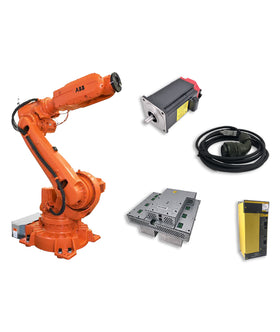
🔧 Recommended Parts for KUKA Error Troubleshooting

Key components commonly involved in kuka error troubleshooting issues and replacements.

Artigo anterior UR Joint Overload Error – Symptoms & Diagnostic Guide

Deixe um comentário

* Campos obrigatório

Blog posts

Comparar produtos

{"one"=>"Selecione 2 ou 3 itens para comparar", "other"=>"{{ count }} de 3 itens selecionados"}

Selecione o primeiro item para comparar

Selecione o segundo item para comparar

Selecione o terceiro item para comparar

Comparar