



A DeviceNet communication error occurs when devices on a DeviceNet network cannot exchange data reliably due to instability in either:
Unlike many other industrial fieldbus systems, DeviceNet combines:
within the same cable system.
This architecture simplifies wiring and reduces installation complexity, but it also makes DeviceNet highly sensitive to:
In real industrial environments, many DeviceNet faults are not caused by failed PLCs or scanners.
The root cause is usually unstable power and signal integrity somewhere in the network.
DeviceNet is based on CAN (Controller Area Network) communication and typically operates using:
Because both power and communication share the same cable infrastructure, DeviceNet behaves differently from Ethernet-based industrial networks.
If network voltage becomes unstable, communication can fail even when the signal wiring itself is technically correct.
This is why DeviceNet systems frequently experience:
In many cases, communication loss is actually a power integrity problem.
Typical symptoms include:
Intermittent faults are especially common in overloaded or aging DeviceNet systems.
Voltage drop is the leading cause of DeviceNet instability.
As cable length increases, electrical resistance increases as well.
If the voltage reaching remote nodes becomes too low, communication reliability deteriorates rapidly.
Typical causes include:
In many real-world systems, voltage instability accounts for the majority of recurring DeviceNet communication faults.
Each DeviceNet node consumes current from the shared network power supply.
If total current demand exceeds the system’s design capacity, the network may experience:
This often becomes worse during simultaneous device activation.
DeviceNet cable design directly affects both:
Using incorrect cable gauge is one of the most overlooked causes of hidden communication instability.
Typically used for:
Advantages:
Typically used for:
Advantages:
However, thin cable has higher resistance and should not be used for long trunk runs.
Improper bus termination can create:
Common causes include:
DeviceNet networks require proper termination at both ends of the trunk line.
Grounding issues are one of the most underestimated DeviceNet failure sources.
If DeviceNet power ground (V-) is connected at multiple locations, ground loops may develop.
This can introduce:
Use a single-point grounding strategy whenever possible to minimize ground potential differences.
If voltage drops below approximately 11V at remote nodes, DeviceNet communication may become unstable or fail completely.
Voltage measurements should always be taken under actual operating load conditions.
Calculate:
Overloaded networks commonly produce:
Verify:
Poor cable layout increases resistance and signal degradation.
Excessively long drop lines are a common hidden problem.
Pro Diagnostic Tip (Hands-On Method):
With the network power OFF, use a multimeter to measure resistance between:
Expected Results:
This is one of the fastest ways to confirm termination and bus integrity in the field.
Critical Warning (Often Overlooked):
If DeviceNet power ground (V-) is connected at multiple points, it can create a ground loop.
This may result in:
Best Practice:
Use a single-point grounding strategy to eliminate ground potential differences.
If voltage drop or instability persists:
Replace with a DeviceNet-rated cable designed for both power and signal integrity
Cable Selection Guide (Critical for System Design):
Important Insight:
Using incorrect cable gauge is one of the leading causes of hidden voltage drop and unstable communication.
Standard commercial cables are not designed for robotic motion environments.
In industrial robotics, DeviceNet cables may experience:
Over time, these conditions degrade both:
This is why robot-rated DeviceNet cables are strongly recommended in high-motion applications.
When DeviceNet communication errors occur repeatedly:
In many real-world cases, correcting power distribution solves DeviceNet communication faults faster than replacing nodes or controllers.Use industrial-grade DeviceNet cables optimized for power + signal performance
| Scenario | Recommended Action |
| Voltage drop detected | Upgrade cable or power design |
| Intermittent node failures | Check current load and connectors |
| Entire network unstable | Inspect power supply and grounding |
| Single node failure | Replace node or connector |
| Communication noise during motion | Inspect cable flex fatigue and EMI shielding |
To reduce unexpected DeviceNet downtime:
Preventive maintenance is especially important in robotic systems with continuous motion cycles.
Voltage drop caused by cable resistance and network load.
Yes. DeviceNet requires stable voltage to maintain communication.
With network power OFF, measure resistance between CAN_H and CAN_L. A properly terminated network should measure approximately 60 Ohms.
Absolutely. Smaller cables increase resistance and lead to voltage loss.
Yes. Ground loops can introduce noise and even damage CAN transceivers.
Additional industrial communication topics that naturally support DeviceNet diagnostics include:
Explore the Full Guide: Industrial Robot Fault Codes Library → Devicenet Communication Error
Explore the complete guide for troubleshooting, repair strategies, and component replacement across industrial robot systems.
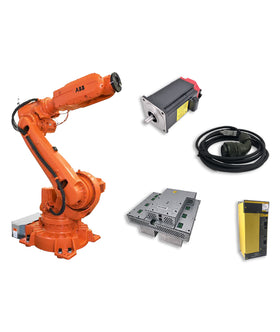
Key components commonly involved in devicenet communication error issues and replacements.


{"one"=>"Selecione 2 ou 3 itens para comparar", "other"=>"{{ count }} de 3 itens selecionados"}
Selecione o primeiro item para comparar
Selecione o segundo item para comparar
Selecione o terceiro item para comparar
Deixe um comentário