

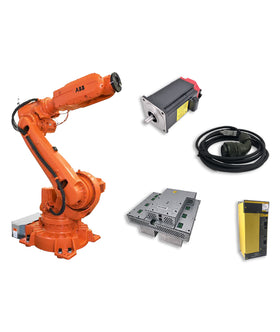

In today’s fast-paced industrial landscape, the demand for automation is no longer a luxury—it’s a necessity. Companies across sectors are under pressure to boost productivity, reduce human error, and maintain consistent product quality. This is where robotic manipulators step in. These advanced robotic arms are engineered to carry out repetitive, dangerous, or highly precise tasks with speed and accuracy, becoming central to smart manufacturing strategies.
From automotive assembly lines to electronics factories and pharmaceutical packaging facilities, robotic manipulators are transforming how products are made, moved, and inspected. As their capabilities expand with the help of AI, computer vision, and advanced sensors, robotic manipulators are not only replacing manual labor but also enabling entirely new processes that were previously impractical or impossible.
A robotic manipulator is a mechanical device—typically shaped like an arm—that can be programmed to move and interact with objects in a controlled manner. Inspired by the dexterity of the human arm, most manipulators are made up of a series of rigid segments (called links) connected by movable joints, allowing for multiple degrees of freedom (DOF).
The DOF determines how freely the arm can move. For example, a 6-axis manipulator can rotate and reach in space much like a human arm, making it suitable for complex tasks such as arc welding or painting. More specialized arms may have fewer or more axes, depending on the motion required.
Each joint is typically powered by a motor—either electric, hydraulic, or pneumatic—and controlled by sophisticated algorithms that determine how the end of the arm (known as the end-effector) should move to complete a task.
These manipulators can be mounted on a stationary base or integrated into mobile robotic platforms. With proper tooling and programming, a single manipulator can adapt to multiple tasks, making it an incredibly flexible tool in modern automation.
Understanding the anatomy of a robotic manipulator reveals why it’s so effective in industrial applications. The major components include:
Base: Anchors the robot and supports the weight of the entire structure.
Arm (Links): Rigid sections that define the robot’s reach. Longer arms can access wider workspaces, while shorter arms offer better precision.
Joints (Actuators): Enable movement between links. Common joint types include revolute (rotational) and prismatic (linear).
Wrist: Provides additional axes for orienting the end-effector. A 6-axis robot typically has three axes in the wrist for pitch, yaw, and roll.
End-Effector: The "hand" of the robot—this could be a gripper, welding torch, vacuum suction cup, or even a camera, depending on the task.
Sensors: Enable the manipulator to detect objects, measure force, avoid collisions, and perform quality control.
Controller: The robot’s brain. It processes commands, runs motion algorithms, and interfaces with other systems on the production line.
Robotic manipulators shine in environments that demand precision, consistency, and repeatability. Below are some of their most prominent industrial applications:
In electronics and automotive production, manipulators handle tiny screws, components, and subassemblies that require high repeatability. By maintaining constant pressure and angle, they reduce the chance of assembly errors.
From loading parts into a CNC machine to moving heavy components between workstations, robotic arms reduce the physical strain on human workers while increasing throughput.
Robotic welding systems offer better control over speed, arc distance, and heat input. This leads to stronger welds and minimal material waste—ideal for shipbuilding, heavy equipment, and car chassis production.
Manipulators ensure even paint coverage on complex surfaces, something that’s difficult to achieve manually. Automated paint systems can also adapt to different product shapes on the fly.
Equipped with vision systems or 3D scanners, robotic arms inspect components for defects, dimensional accuracy, or surface finish, significantly improving product quality before packaging.
Speed is critical in packaging operations. Robotic arms can work non-stop to sort, box, seal, and stack products with precise spacing and orientation, maximizing pallet space and reducing shipping damage.
In nuclear facilities, chemical plants, or deep-sea research, manipulators act as remote-operated tools to minimize human exposure to dangerous environments.
Kinematics governs how a robotic manipulator moves its parts to reach specific positions or orientations. It’s broken down into two key concepts:
This involves calculating the position and orientation of the end-effector based on known joint angles. For example, when a robot knows how much each joint has rotated, it can predict where the gripper is located in space.
Inverse kinematics answers the reverse question: "What joint angles are needed to move the end-effector to this exact point?" IK is far more complex but essential for tasks requiring pinpoint accuracy—such as in robotic surgery or high-resolution 3D printing.
Modern manipulators use real-time kinematic models to adjust for unexpected movements, ensuring that operations remain accurate even in dynamic environments.
Selecting the ideal manipulator for your application involves several critical factors:
Degrees of Freedom (DOF): More DOF equals greater flexibility but often higher cost and complexity.
Payload Capacity: The arm must support the weight of the object, including tooling.
Reach and Workspace: Determine the maximum range and required motion area.
Precision and Repeatability: How accurate the robot needs to be, especially for micro-assembly or optical applications.
Speed and Cycle Time: Important for packaging, sorting, or high-volume production.
Environmental Conditions: Some robots are designed for clean rooms, others for harsh environments.
Integration Capability: Can the manipulator easily connect with your existing machines, software, or conveyors?
Robotic manipulators are more than just mechanical arms—they are intelligent, adaptable tools that help manufacturers meet rising demands for efficiency, safety, and scalability. Whether you're automating a simple pick-and-place operation or deploying robotic arms in a smart factory, understanding their capabilities and inner workings is key to maximizing ROI.
As technology advances, robotic manipulators will become even more powerful—integrating AI, machine learning, and IoT capabilities to operate autonomously and optimize processes in real time.
Looking to enhance your automation system? Browse a full selection of robotic manipulators, accessories, and parts at inrobots.shop. Whether you need a high-speed SCARA robot or a 6-axis arm with vision integration, we’ve got the right tools for your industrial needs.
A: Common types include articulated robots (6-axis), SCARA robots, Cartesian robots, delta robots, and cylindrical manipulators—each suited for specific motion and workspace needs.
A: It depends on your task. 4-axis is fine for basic pick-and-place. 6-axis allows for full rotation and complex orientation control.
A: Modern robots support user-friendly interfaces, simulation software, and offline programming to simplify deployment—even for non-experts.
A: Yes. With changeable end-effectors and task-based programming, one arm can handle welding, packaging, inspection, or more in flexible production cells.
Explore the Full Guide: Industrial Robot Knowledge Hub → Industrial Robot Types & Applications Cluster
Explore foundational knowledge and practical insights to better understand industrial robot systems and components.
Key components commonly involved in robot applications issues and replacements.
No related parts found. Please check available components in our catalog.


{"one"=>"Selecione 2 ou 3 itens para comparar", "other"=>"{{ count }} de 3 itens selecionados"}
Selecione o primeiro item para comparar
Selecione o segundo item para comparar
Selecione o terceiro item para comparar
Deixe um comentário