

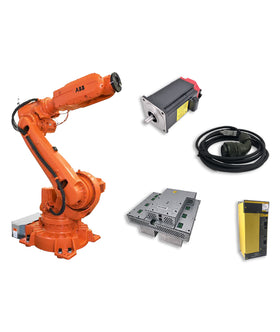
In today’s hyper-connected world, Ethernet cables remain the invisible force powering everything from home networks to massive industrial robots. While wireless technologies like Wi-Fi and 5G grab headlines, Ethernet continues to be the gold standard for speed, stability, and reliability. And when it comes to robotics, Ethernet isn’t just an option—it’s a necessity.
1.What Is an Ethernet Cable?
An Ethernet cable is a type of network cable used to connect devices like computers, routers, and industrial machines to a local area network (LAN). Unlike wireless connections, Ethernet provides a stable, wired pathway that transmits data through copper wires or fiber optics. These cables come in different categories—such as Cat5e, Cat6, Cat6a, Cat7, and Cat8—each designed for specific speeds, bandwidths, and applications. In industrial robotics, Ethernet cables act as a lifeline for communication, ensuring fast, secure, and interference-free data transfer between controllers, sensors, and robotic systems.

2.Why Ethernet Still Matters in 2025
Despite the growth of wireless solutions, Ethernet cables are still the backbone of modern networking. They provide:
- Low latency: Crucial for data-heavy applications.
- High bandwidth: Perfect for streaming, gaming, and large-scale data transfer.
- Reliability: Immune to most interference and network drops.
For industrial robots, these benefits aren’t just conveniences—they’re mission-critical.

3.Ethernet Cables vs. Other Cable Types in Robotics
While Ethernet cables are the backbone of networking and industrial automation, robotic systems often rely on a variety of cable types to handle different functions. Signal cables transmit low-voltage control and sensor signals, enabling precise movement and feedback from motors and sensors. Servo cables carry power and encoder signals to drive servo motors, ensuring accurate positioning and smooth operation. Unlike these specialized cables, Ethernet cables focus on high-speed data communication between controllers, PLCs, and external devices, offering reliable bandwidth and low latency for complex automation tasks. In modern robotic setups, a combination of Ethernet, signal, and servo cables—often using shielded or flat cable designs—ensures seamless connectivity, minimal interference, and maximum operational efficiency.
4.Ethernet Cables in Modern Networking
Before diving into robotics, let’s look at Ethernet in everyday use:
- Cat5e: Affordable, up to 1 Gbps, ideal for basic home setups.
- Cat6 / Cat6a: Faster, supporting 10 Gbps; widely used in offices and smart homes.
- Cat7 & Cat8: High-performance cables for enterprise-level data centers.
- Flat Ethernet cables: Slim, flexible, and perfect for tight spaces.
- Flat patch cables: Short, compact, and great for connecting nearby devices.
Each type serves a purpose, and the same principles apply when building robotic systems.
Industrial Ethernet Cable: The Bridge to Robotics
Industrial automation requires rugged, shielded Ethernet cables designed to survive extreme environments. Unlike consumer-grade versions, these cables feature:
- Shielding against EMI (Electromagnetic Interference)
- Abrasion-resistant jackets for durability
- Flexibility for continuous motion in robotic arms
- Support for real-time communication protocols (Profinet, EtherCAT, Ethernet/IP)
This makes Ethernet a perfect fit for robotics, where precision and uptime are critical.

5.How Robots Use Ethernet Cables
Industrial robots—from assembly line arms to automated guided vehicles (AGVs)—depend on Ethernet for:
- Real-time communication: Ensuring motors, sensors, and controllers operate in sync.
- Data exchange: Transmitting feedback between sensors, cameras, and AI control units.
- Reliability in harsh environments: Shielded Ethernet cables withstand oil, dust, and vibration on factory floors.
- System integration: Linking robots with CNC machines, PLCs, and industrial PCs seamlessly.
For example, a FANUC or KUKA robot uses Ethernet cables to connect motion controllers, safety systems, and external devices with millisecond-level precision.
6.Ethernet Cables vs. Wireless in Robotics
So why not just use Wi-Fi?
- Latency: Even a tiny delay can throw off robotic precision.
- Interference: Wireless signals are vulnerable to EMI from industrial equipment.
- Reliability: Robots can’t afford downtime due to network drops.
For robotics, wired Ethernet cables are the gold standard—delivering predictable, high-speed performance that wireless can’t match.
Choosing the Right Ethernet Cable for Robotics
Selecting the right Ethernet cable for robotics is about more than just speed ratings — it’s about ensuring reliability, flexibility, and protection in demanding industrial environments. The right cable can make the difference between smooth automation and costly downtime. Here’s how to choose wisely:
1. Ethernet Cable Category and Speed
Different Ethernet categories deliver different speeds and frequencies:
- Cat5e: Budget-friendly, supports up to 1 Gbps — suitable for light-duty automation or monitoring.
- Cat6 and Cat6a: Handle up to 10 Gbps — ideal for most modern robotic systems and smart factories.
- Cat7 and Cat8: Ultra-high-speed cables (up to 40 Gbps) — best for data-heavy systems, AI-enabled robots, or large industrial networks.
For most industrial robots, Cat6a shielded Ethernet cables offer the best balance between performance and cost.
2. Shielding and Interference Protection
Industrial environments are filled with electromagnetic interference (EMI) from motors, welders, and power lines. Shielded Ethernet cables (STP or FTP) protect data integrity by blocking EMI, ensuring accurate communication between robot controllers and sensors.
- Use braided shielded cables for flexibility in moving parts like robot arms.
- Choose foil shielded cables for maximum EMI protection in high-noise environments.
3. Flexibility and Motion Endurance of Ethernet Cables
Robots move constantly, so cables must endure repetitive bending and twisting. Look for high-flex Ethernet cables or robot-grade Ethernet cables with reinforced jackets and strain reliefs.
- Flat Ethernet cables and flat ribbon cables are excellent for routing through compact spaces or moving joints.
- Flat wire solutions also simplify cable management and reduce wear.
4. Environmental Resistance
In robotics, cables face heat, oil, vibration, and dust. Select cables rated for industrial-grade environments, featuring:
- Abrasion-resistant outer jackets
- Oil and chemical resistance
- Temperature tolerance (-40°C to +80°C or higher)
These ensure long-term performance even in harsh factory conditions.
5. Connectors and Compatibility
Ensure compatibility with your robot’s brand and control system — whether it’s FANUC, KUKA, ABB, or Yaskawa. Industrial Ethernet connectors such as M12 or RJ45 should be robust, vibration-resistant, and sealed against dust or moisture.
6. Application-Specific Needs
- For stationary robots or control cabinets: Standard Cat6a shielded cables work well.
- For mobile or articulated robots: Use flexible, shielded, flat Ethernet cables to withstand motion.
- For high-speed automation or data-intensive AI robots: Opt for Cat7 or Cat8 industrial Ethernet cables.
7. Partnering with a Reliable Supplier
Finally, choose a trusted supplier like inRobots.shop, which offers a wide range of robot cables, servo cables, and industrial Ethernet cables — all tested for durability and performance. With genuine, refurbished, and cost-effective options, inRobots ensures you get the right cable for every robotic need.
Conclusion
Ethernet cables are more than just the backbone of modern networking—they are the nervous system of industrial robotics. From real-time control to reliable data transfer, Ethernet ensures that robots operate with precision, speed, and safety.
At inRobots.shop, we provide a wide range of high-quality robot cables, servo cables, and industrial Ethernet solutions to keep your automation systems running at their best.


Deixe um comentário