

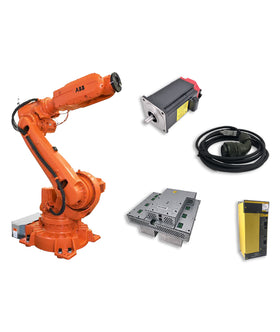


In 2019, global robot shipments reached 373,000 units, with collaborative robots accounting for 18,000 units; the Chinese market installed 140,000 units, making it the largest single market; the robot density is 187 robots per 10,000 employees.
2019 Market Share of Major Chinese Industrial Robot Manufacturers:
The "Big Four" of robotics—Fanuc, ABB, Kuka, Yaskawa—hold nearly 40% of the market share.
2019 Market Share of Major Domestic Chinese Industrial Robot Manufacturers:
Leading domestic enterprises include Estun, Inovance, Zhongweixing, Delta, and Efort, among others.
2019 Market Share of China's AGV Robot:
2019 Market Share of Industrial Robot System Integration:
Proportion of Different Types of Robots:
Collaborative robots, although relatively growing faster, still account for a relatively small proportion of absolute shipments.
Looking at the entire industry chain, the upstream core components constitute the highest proportion of the cost of an industrial robot, approximately around 70%. System integration hardware costs are relatively low and are more service-oriented, providing solutions. Midstream robot manufacturers either purchase core components or use their own, resulting in significant cost differences.
Cost Composition of Industrial Robots:
Controllers are akin to the brain of an industrial robot, responsible for controlling the motion of the entire robot, with core technologies concentrated in software algorithms. Controllers best reflect the tuning level and style of each manufacturer, usually independently designed and developed by robot manufacturers, representing their "soft power."
The main task of an industrial robot controller is to receive detection signals from sensors such as vision and force, drive the individual servo motors in the mechanical arm according to the requirements of the operation task, and thereby control the robot's motion position, posture, speed, trajectory, operation sequence, and action time in the workspace. Additionally, the controller features various input/output interfaces and a human-machine interaction interface, characterized by simple programming, online operation prompts, software menu operation, and ease of use.
The market share of controllers is essentially consistent with the robot market share, with Fanuc, Kuka, ABB, and Yaskawa occupying the top four positions. Chinese enterprises have not yet formed a competitive advantage in the controller market, with a share of only about 16%. 2019 Market Structure of China's Industrial Robot Control Systems:
After the controller issues motion commands, corresponding mechanical components are needed to execute them precisely, which is the primary role of the servo system. The servo system can be seen as the cerebellum of the industrial robot, providing accurate displacement, speed, and torque for the robot's joint motion according to the controller's commands. A typical servo system consists of a servo drive and a servo motor.
In terms of market share, these brands account for most of the servo system market. Japanese servo systems represented by Mitsubishi, Yaskawa, and Panasonic hold the top three positions in the market, with a combined share of over 30%. Following closely are Delta from Taiwan and Siemens from Europe, with shares of 9.9% and 6.5%, respectively. Chinese servo manufacturers represented by Inovance Technology and Hechuan Technology have developed rapidly in recent years, but their market share remains small, at 6.2% and 1.5%, respectively, with significant room for improvement.
2019 China AC Servo Motor Market Size by Manufacturer:
Representative Chinese manufacturers include Inovance Technology, Estun, Xind, Huazhong Numerical Control, and Guangzhou Numerical Control. However, few Chinese manufacturers have both servo drives and motors, and even fewer have high-resolution optical encoders. Among them, Inovance Technology's servo system has a relatively complete industry chain coverage, with a market share of about 5% in China.
The reducers mainly used in the field of industrial robots are RV reducers and harmonic reducers. RV reducers have higher precision and load capacity but are larger in size and weight and have complex structures, typically placed in heavy-load positions such as the base, large arm, and shoulder. Harmonic reducers, on the other hand, have a simple and compact structure but lower load capacity, often used in low-load parts such as the small arm, wrist, and hand of small and large robots. The two types of reducers have different usage scenarios and are complementary to each other.
As pure mechanical parts, the core technology of reducers is not related to industrial robots. Therefore, even industrial robot giants such as ABB, Fanuc, Yaskawa, and Kuka do not develop reducers themselves but purchase them externally. Currently, the RV reducer and harmonic reducer markets are basically monopolized by Japanese manufacturers, represented by Nabtesco, Sumitomo, Harmonic Drive, and Shinano, accounting for most of the global robot reducer market share. Nabtesco and Harmonic Drive hold a monopolistic position in the RV reducer and harmonic reducer fields, respectively.
2019 China RV Reducer Market Share by Major Manufacturers:
2019 China Harmonic Reducer Market Share by Major Manufacturers:
Chinese reducer manufacturers have made certain progress in recent years, mainly represented by Lida Harmonic in the harmonic reducer field, whose product performance has reached the same level as Harmonic Drive. In recent years, they have gradually begun to enter international mainstream robot manufacturers for testing and are expected to achieve rapid growth in the next 1-2 years. However, in the RV reducer field, due to its complex and precise mechanical structure and processing difficulties, there is still a significant gap between Chinese-made RV reducer manufacturers and Japanese brands.
Cooperation between Reducer Companies and Robot Manufacturers:
Explore the Full Guide: Industrial Robot Knowledge Hub → Industrial Robot Market & Strategy Cluster
Explore the full guide to compare options and select the right components for your industrial automation needs.
Key components commonly involved in market & strategy issues and replacements.


{"one"=>"Selecione 2 ou 3 itens para comparar", "other"=>"{{ count }} de 3 itens selecionados"}
Selecione o primeiro item para comparar
Selecione o segundo item para comparar
Selecione o terceiro item para comparar
Deixe um comentário