

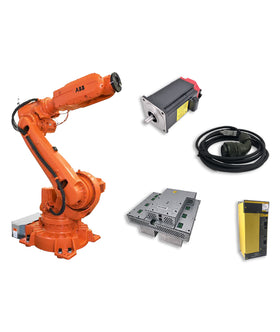


In the realm of industrial robotics, the KUKA robot control system stands out for its precision, efficiency, and reliability. A pivotal component of this system is the Cabinet Control Unit (CCU), which acts as the power distribution device and communication interface for all system components.
The Cabinet Control Unit (CCU), a crucial component in the KUKA robot control system, serves as the power distribution device and communication interface for all system components.
The CCU board comprises two main parts, the CIB (Cabinet Interface Board) and the PMB (Power Management Board). These boards collectively function as the transit hub within the control system, facilitating seamless data transmission and processing.

In the intricate world of robot control systems, the CCU (Control and Communication Unit) Board stands as a cornerstone component, orchestrating a multitude of essential functions that ensure the smooth, safe, and efficient operation of robots. Let's delve into the key roles played by the CCU Board in detail.
One of the primary and most critical functions of the CCU Board is to serve as the communication interface within the robot control system. The CCU Board acts as the bridge that facilitates this uninterrupted information flow. It employs a range of communication protocols, depending on the specific requirements of the system, to establish reliable connections between different parts.
Whether it's transmitting sensor data to the control algorithm or receiving commands from the operator interface, the CCU Board ensures that the information is accurately and promptly delivered. This seamless communication is vital for the robot to perform tasks with precision and respond effectively to changing environmental conditions.
Safety is of paramount importance in robotics, and the CCU Board plays a crucial role in enhancing the safety of the control system through its safety output and input terminals.
Firstly, it controls the main contactor, which is essentially the power switch for the robot. By carefully managing the activation and deactivation of the main contactor, the CCU Board can quickly cut off power to the robot in case of an emergency or abnormal condition, preventing potential accidents and damage.
Secondly, the CCU Board is responsible for calibration and positioning tasks. It ensures that the robot's movements are accurate and within the specified parameters. Through precise control signals, it adjusts the position of the robot's joints and end-effectors, enabling it to perform tasks with high repeatability and accuracy.
In addition, the CCU Board monitors the fan operation of the control system. Fans are essential for dissipating heat generated by the electronic components, and any malfunction in the fan operation can lead to overheating, which can damage the system. By continuously monitoring the fan speed and status, the CCU Board can detect any issues early on and take appropriate action, such as triggering an alarm or shutting down the system to prevent further damage.
Temperature control is another critical aspect of robot operation, and the CCU Board is equipped with the capability to monitor and control the robot's temperature. It achieves this by receiving signals from thermal switches located on transformers and coolers within the system.
Transformers and coolers are prone to generating heat during operation, and if the temperature exceeds safe limits, it can affect the performance and lifespan of the components. The CCU Board continuously monitors the temperature values from these thermal switches and compares them with predefined safe ranges.
If the temperature approaches or exceeds the safe limit, the CCU Board can take corrective actions, such as activating additional cooling fans or reducing the power output of the components, to bring the temperature back within the safe range. This proactive temperature management ensures that the robot operates reliably and efficiently, even under demanding conditions.
Recognizing the diverse needs of customer applications, the CCU Board provides eight dedicated measurement input terminals. These terminals are specifically tailored to accommodate a wide range of sensors and measurement devices, allowing customers to integrate their own custom solutions into the robot control system.
What sets these measurement input terminals apart is their high-speed monitoring capability. They can monitor the input signals at a rate of 125 microseconds per cycle, which is crucial for high-precision control requirements.
In applications such as precision manufacturing, where even the slightest deviation can result in defective products, the ability to capture and process measurement data with such high speed and accuracy is essential. The CCU Board's measurement input terminals enable customers to achieve the level of precision and control they need to succeed in their specific applications.
A red - lit fuse status indicator LED signifies that the fuse is damaged. A damaged fuse can severely disrupt the normal operation of the safety node, potentially rendering it incapable of performing its intended safety functions. This could lead to unsafe conditions in the overall system it is a part of.
When the LED is off, it means the fuse is in a normal, healthy state. In this case, the electrical circuit is properly protected, and the safety node can rely on the fuse to prevent overcurrent situations.
If the LED is on, indicating a damaged fuse, it is imperative to replace the damaged fuse promptly. This will restore the proper operation of the safety node and ensure it can carry out its safety - related tasks effectively.
A green - lit PWRS/3.3V LED indicates that power is present in the system. This means the safety node is receiving the required electrical supply to function normally. Without this power, the safety node would be unable to perform its critical safety - related operations.
When the LED is off, it implies there is no power supply to the safety node. Without power, the node is essentially non - functional and cannot carry out its safety - related tasks, which could pose a risk to the overall system.
When the LED is off, the first step is to check the F17.3 fuse. If the LED PER/3.3V lights up after this check, it indicates there is an issue with the CCU board. In such a case, the CCU board should be replaced to ensure that the safety node receives the necessary power and can function properly.
An orange LED blinking at a frequency of 1Hz indicates that the system is in a normal operating state. This regular blinking pattern is a positive sign, showing that all safety - related functions are running as expected, and the safety node is performing its duties effectively.
When the LED blinks at a frequency of 10Hz, the system is in the startup phase. During this period, the safety node is busy initializing its components and preparing for normal operation. This is a normal part of the system's boot - up process.
If the LED blinks in a pattern that represents an internal error code, it means there is an internal error within the system. This could be due to various reasons, such as faulty wiring or a malfunction in the internal components of the safety node. These issues need to be addressed to ensure the proper functioning of the safety node.
In summary, by understanding the meanings of different LED colors and blinking patterns, users can quickly identify potential issues and take appropriate measures to ensure the safety and proper functioning of the system. Whether it's a simple fuse replacement or a more complex board replacement, these indicators guide users through the troubleshooting process effectively.
Explore the Full Guide: Industrial Robot Knowledge Hub → Repair & Troubleshooting Cluster
Explore the complete guide for troubleshooting, repair strategies, and component replacement across industrial robot systems.
Key components commonly involved in repair guides issues and replacements.


{"one"=>"比較する2つまたは3つのアイテムを選択します", "other"=>"選択された3つのアイテムの{{ count }}"}
コメントを残す