

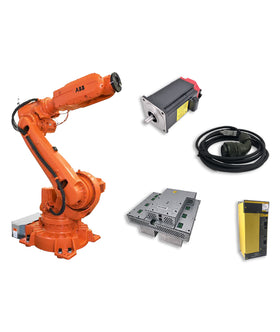


In the modern era of industrial automation, robots are indispensable components of the production line. These highly flexible machines require precise electrical connections to perform complex tasks, and industrial robot wire harnesses are the key link in this chain. This article will delve into the composition, functionality, and importance of wire harnesses in industrial automation.
An industrial robot wire harness is a structured assembly of cables, connectors, terminals, and protective sleeving. Unlike loosely routed cables, a wire harness bundles multiple wires into a single organized system. This ensures reliable power delivery, signal transmission, and data communication in complex robotic systems.
Wire harnesses are engineered to withstand harsh industrial conditions, repetitive motion, and high-speed robotic operations. They are the backbone of connectivity, maintaining efficiency and safety in automation environments.

Power wire harnesses can supply energy to robotic motors, actuators, and drives.
Control signal harnesses have the capability of transmitting precise instructions from robot controllers.
Data communication harnesses are capable of connecting sensors, cameras, and network interfaces.
Hybrid harnesses can combine power, control, and data lines in a single, organized system for compact and efficient routing.

Wire harnesses in industrial robots are composed of multiple cable assemblies that connect the robot's controllers, sensors, and actuators. Each cable must be selected based on the type of signal it carries, such as power, data, or video.
Connectors are an indispensable part of a wire harness, responsible for reliably connecting the cables to various components of the robot. They must be capable of withstanding vibrations and impacts due to the continuous bending and twisting of the wire harness during the robot's motion.
Terminals are the components that connect the cables to connectors or circuit boards. They must have good electrical conductivity and mechanical strength to ensure stable signal transmission.
The connection between terminals and cables can be achieved through crimping or soldering. Crimping fastens the terminal to the cable mechanically, while soldering creates an electrical connection by heating and using solder. Both methods require precise operation to ensure the reliability of the connection.

Routing is an essential aspect of wire harness design, determining the spatial layout of the harness within the robot. Proper routing not only protects the wire harness from mechanical damage but also optimizes cable length, reducing production costs.
After assembly, the wire harness must undergo rigorous testing to ensure its performance meets industrial standards. Testing includes checking the conductivity of the cables, the reliability of the connectors, and the electromagnetic compatibility of the entire harness.

Since industrial robots are used in a wide variety of applications, the wire harnesses often need to be customized to meet specific application requirements. Custom wire harnesses can meet the electrical and spatial requirements of specific equipment, enhancing the efficiency and reliability of the robot system.
Industrial wire harnesses are designed for harsh industrial environments, capable of withstanding extreme temperatures, humidity, oil, and dust. These harnesses often use special materials and processes to improve their durability and stability.
They provide reliable power and signal transmission, reduce downtime, support high-speed motion, and improve safety.
Flexibility, torsion resistance, EMI shielding, durable insulation, and standardized connectors.
A wire harness bundles multiple cables into an organized system, offering better protection, reliability, and performance than loose cables.
Sensor applications in industrial robots typically use shielded twisted pair (STP) wires or flexible signal cables. These wires are designed to:
For high-speed data sensors, Category 5e/6 (Ethernet) cables or coaxial cables may also be used, depending on the sensor type and communication requirements.
Industrial robot wire harnesses are the backbone of connectivity, linking the various components of a robot system to ensure stable operation. As industrial automation technology continues to advance, the design and manufacturing of wire harnesses are also innovating to meet the demands for higher efficiency and performance. In the future, with the application of new materials and technologies, there is every reason to believe that industrial robot wire harnesses will become smarter, more flexible, and more reliable.
Explore the Full Guide: Industrial Robot Spare Parts → Industrial Robot Cable Guide
Explore foundational knowledge and practical insights to better understand industrial robot systems and components.
Key components commonly involved in robot cables issues and replacements.


{"one"=>"比較する2つまたは3つのアイテムを選択します", "other"=>"選択された3つのアイテムの{{ count }}"}
コメントを残す